Why an EC gas blower supplier is harder to vet than it first appears
If you are searching for an EC gas blower supplier, the obvious questions are usually the wrong ones. Buyers tend to start with price, then jump to airflow claims, then ask whether the unit is “energy saving.” Those things matter, but they do not tell you whether the blower will actually suit the ductwork, the gas conditions, or the control strategy behind the machine.
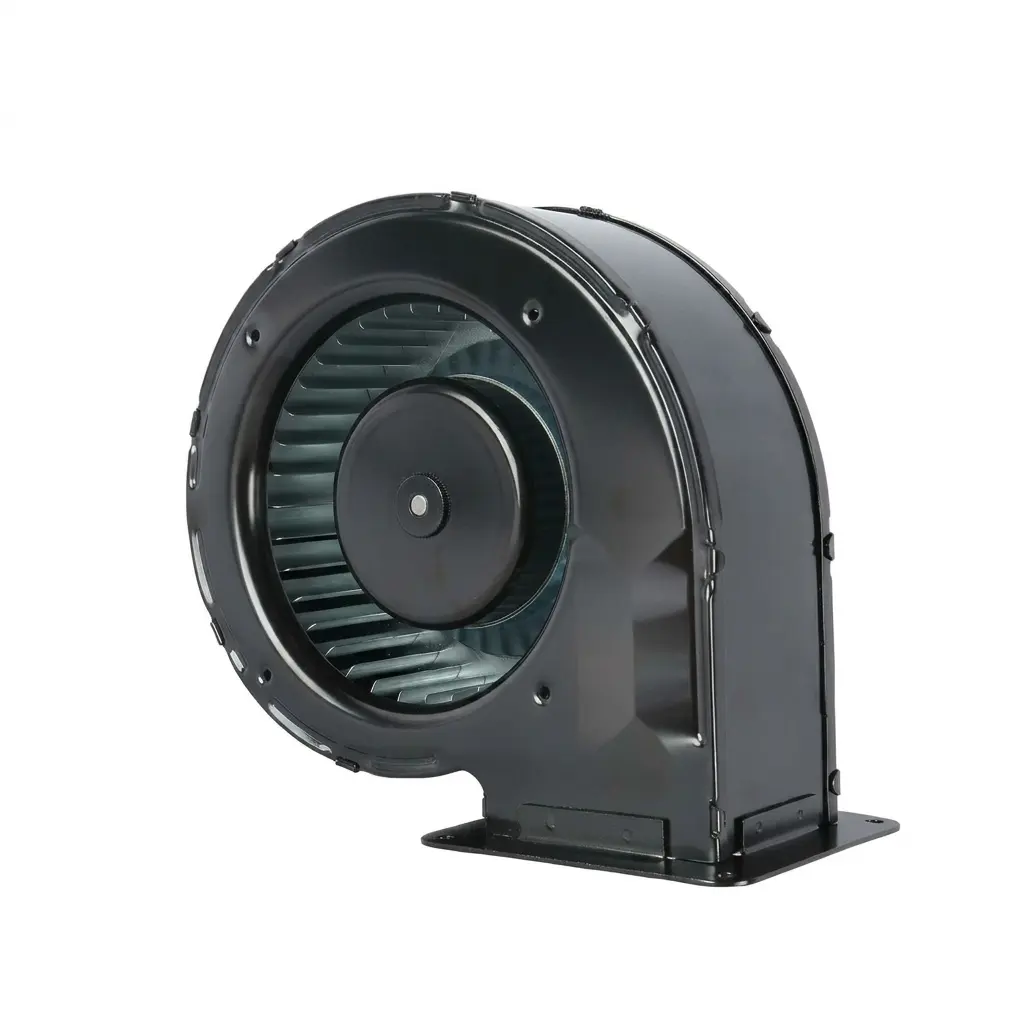
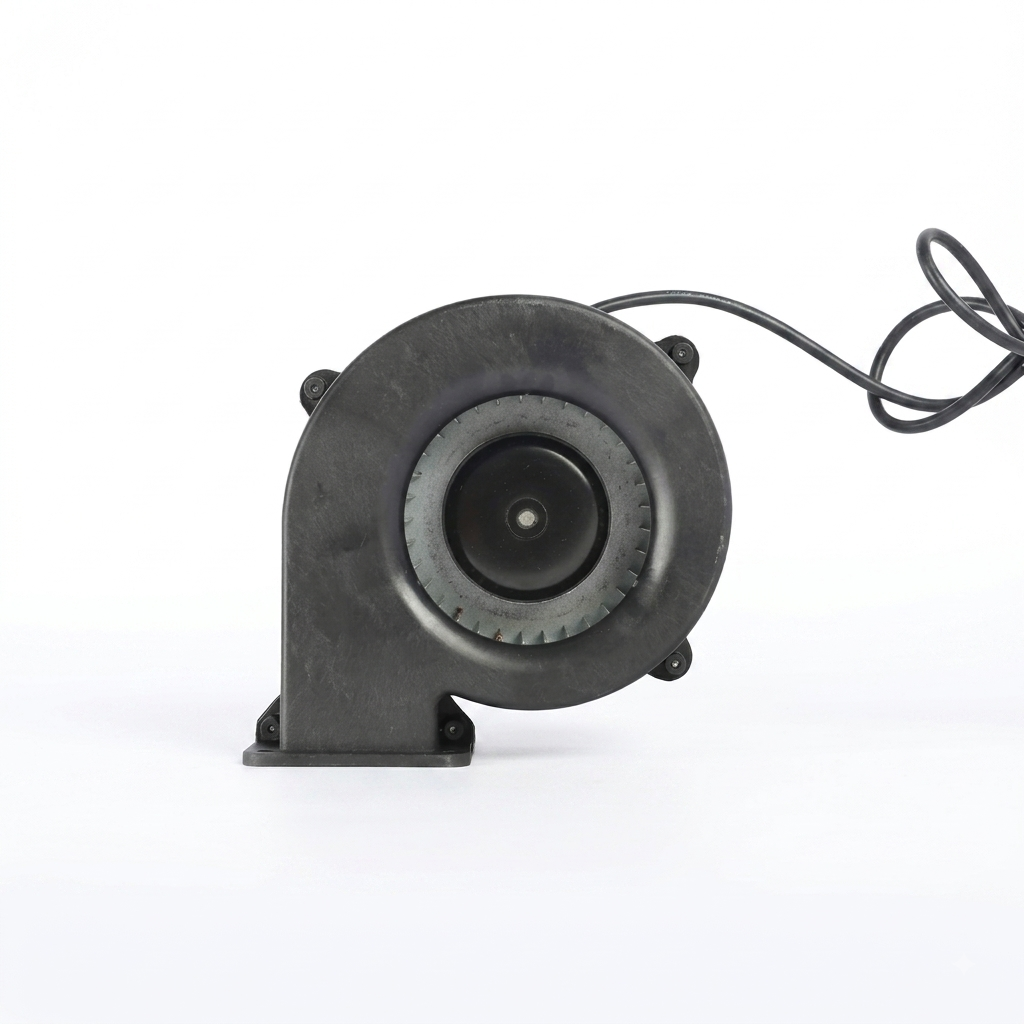
That is especially true for electrically driven blower assemblies like the one described here: a compact fan/blower unit with a cast metal housing, a flanged mounting face, a rear motor cover, and an electrical connector port. It looks like a practical industrial component, not a decorative one. In other words, this is the kind of part where the details hidden behind the cover matter more than the polished sales sheet.
For sourcing teams, the real decision is not simply who can sell a blower. It is who can supply a unit that fits the application, can be documented properly, and can be supported when the line is already built around it.
What the visible product structure suggests
The visible build tells a useful story. The housing appears to be a silver-gray cast metal frame with a round flange and mounting ears, while the rear cover looks like molded plastic or a coated composite. That is a common industrial approach: cast metal for rigidity and thermal stability, molded material for protection and service access. Multiple fasteners are visible, which usually helps with maintenance and assembly, though it also means the buyer should ask how often the unit is intended to be opened in service.
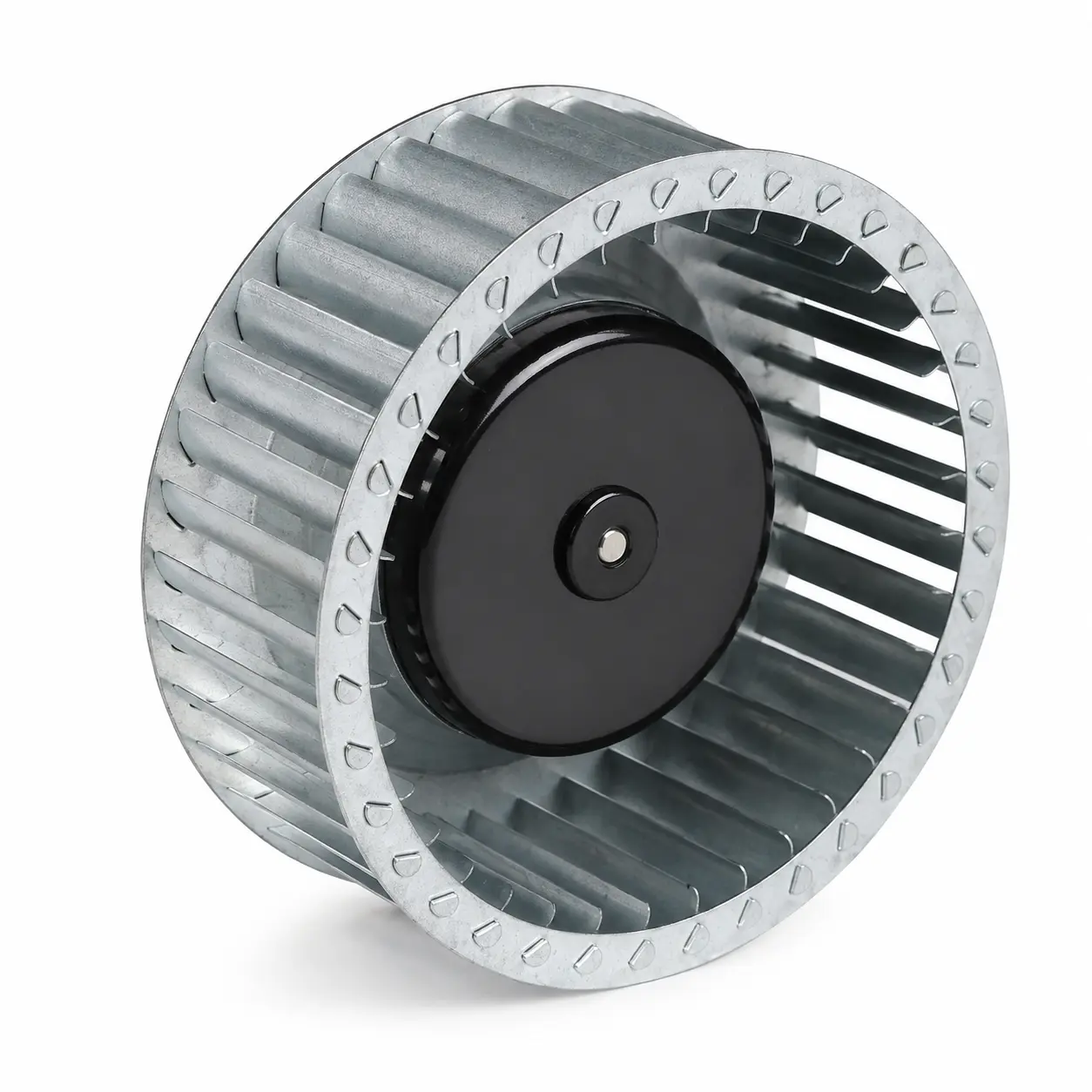
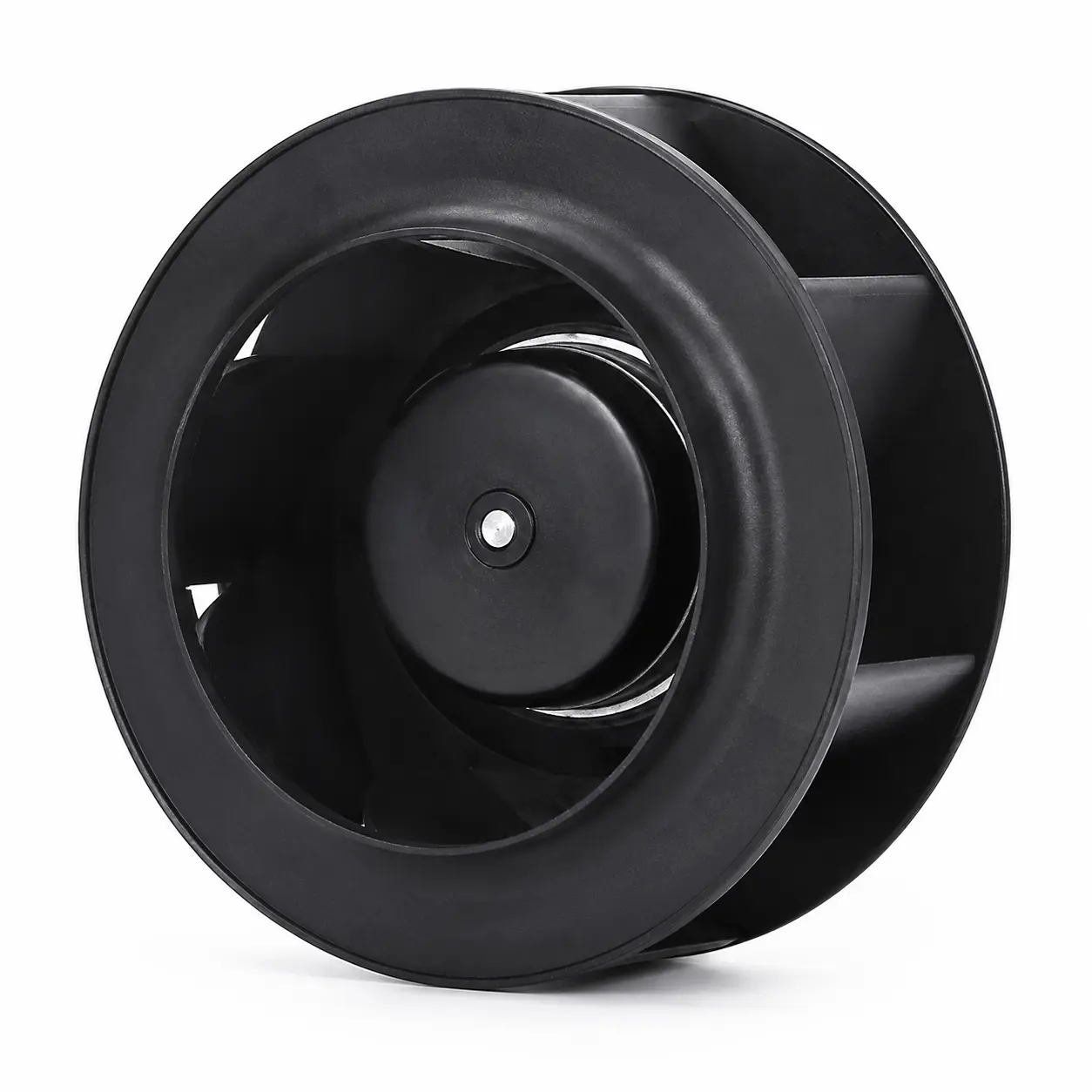
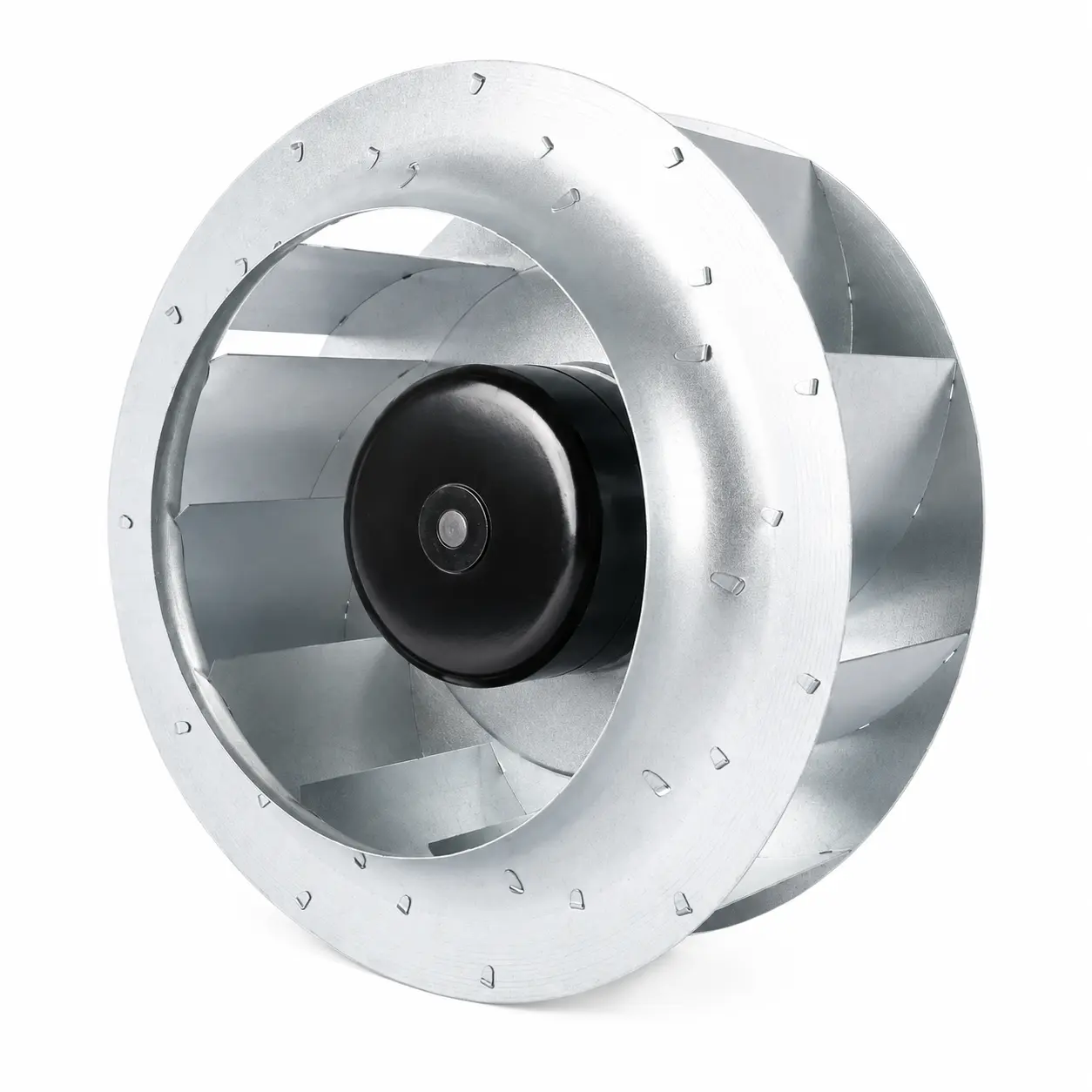
The rear grille suggests a motor section tucked behind the air-moving chamber. The exact impeller type is not confirmed, so it would be a mistake to assume axial behavior from the image. The form factor more closely resembles a centrifugal blower or radial fan used in ducted equipment, HVAC modules, air-purification systems, or machine cooling. That matters because the system curve, static pressure capability, and noise behavior are different from an open propeller fan.
A small green label marked “220V” is visible on the housing, but that should be treated as a clue, not a final specification. Buyers should confirm the full electrical rating, frequency, control method, and any region-specific compliance requirements before they treat that marking as binding.
EC blower sourcing: what buyers usually need to decide
When engineers or sourcing managers compare options, they are usually trying to answer five questions at once: Will it fit? Will it perform? Will it be safe in the target environment? Can the supplier repeat the quality? And can the program survive a service call six months after launch?
EC motors are attractive because electronically commutated designs can improve efficiency and control compared with basic fixed-speed approaches. In practice, that only helps if the fan, motor, and controller are matched properly. A strong supplier will not just quote a motor. They will help define the operating point, control range, and the limits of the enclosure or ducting around it. If the blower is being considered for gas handling rather than plain ventilation, the stakes rise again: temperature, contamination, sealing, and compatibility with the process medium all become part of the discussion.
Quick-reference checks before you shortlist a supplier
Before you compare samples or ask for commercial terms, a practical buyer should confirm the basics below.
- Application: ventilation, HVAC, air purification, equipment cooling, or gas handling.
- Electrical requirements: voltage, frequency, control input, and whether the system is fixed-speed or variable-speed.
- Mechanical fit: flange pattern, mounting points, outlet orientation, and available installation space.
- Environmental limits: temperature, dust, moisture, vibration, and whether the unit will run continuously or intermittently.
- Documentation: drawings, wiring information, model identification, and test records where available.
- Compliance: confirm the exact model’s documentation rather than assuming every product carries the same approvals.
That last point is worth repeating because it causes avoidable trouble. Company notes indicate certifications including CCC, CE, LVD, RoHS, REACH, cUL, and ISO 9001, and an annual fan capacity of 200,000 units. Those are useful signals, but they do not remove the need to confirm which certification applies to which product family and market.
What separates a useful supplier from a merely available one
A capable EC gas blower supplier should be comfortable discussing both the product and the process behind it. On the product side, they should be able to explain the housing material, the motor arrangement, the connector interface, and the service access points. On the process side, they should be able to describe how the housing is made, how the assembly is put together, and how they control consistency from unit to unit.
The manufacturing picture suggested here is fairly standard industrial practice: die casting or casting for the main housing, plastic molding for the rear cover, then mechanical and electrical assembly. That sounds simple, but repeatability is not automatic. A stable supplier will have a clear approach to screw retention, cover fit, wiring integrity, and final inspection. If the product will run in an enclosed machine, small inconsistencies can become noise, heat, or early failure.
If you are evaluating an EC gas blower factory directly, the main advantage is often visibility. You may gain a clearer view of process control and engineering support. The risk, however, is assuming that factory-direct automatically means better. Some factories are excellent at one product family and weak at documentation or export support. The better question is whether the organization can support your exact application without hand-waving.
Common mistakes buyers make
One common mistake is selecting by housing size alone. A compact blower with a neat flange can still be the wrong choice if the pressure curve is not right for the duct system. Another is treating the visible voltage label as enough to lock in a specification. A third is ignoring the media condition. A blower that works well for clean ventilation air may not be appropriate for warmer, dirty, or chemically sensitive gas streams.
Another avoidable error is over-focusing on headline certifications while skipping the practical paperwork. Ask for the exact model data, not just a list of company-wide approvals. Ask what is covered by the current test records. Ask whether the connector shown in the photo is standard or customer-specific. These are unglamorous questions, but they save time when the first pilot build starts.
Finally, do not assume that energy efficiency alone settles the decision. An EC motor can be a smart choice, but only when the installed system actually benefits from control and part-load operation. If the blower runs in a narrow, fixed condition, the economics may look different than the brochure suggests.
Questions worth asking before you place an order
Technical questions
What is the rated operating point? What control method is used? Is the fan intended for ducted resistance, free air movement, or a specific machine enclosure? What temperatures and duty cycle are acceptable?
Manufacturing questions
What parts are cast, molded, or assembled in-house? How is the motor section protected during assembly? What does final inspection cover? If the design changes, how is revision control managed?
Commercial questions
Can the supplier support stable repeat orders? Are drawings and labels consistent across batches? If the project expands, can the supplier keep up without changing the part unnoticed?
FAQ for sourcing teams
Is this kind of blower always suitable for gas applications?
No. The term “gas blower” can cover different duties, and the suitability depends on the gas type, temperature, contamination, sealing needs, and the operating environment. A ventilation blower is not automatically a process-gas solution.
Why does the housing material matter so much?
Because the housing affects rigidity, heat behavior, service life, and how the unit fits into the machine. A cast metal shell can be a practical choice for industrial equipment where mounting strength matters.
Should I choose a supplier or a factory?
Choose the organization that can document the product, support the application, and keep quality consistent. A factory may offer more direct engineering access, but a good supplier can be just as effective if they understand the program and communicate clearly.
What should I request first?
Ask for drawings, electrical details, application limits, and any available compliance documentation tied to the exact model. If possible, request a sample or pilot unit for fit and functional review.
A practical next step
If you are shortlisting an EC gas blower supplier, start with the real operating conditions, not the catalog headline. Match the blower type to the system pressure, confirm the electrical and mechanical interfaces, and verify which certifications apply to the exact model you want to buy. That process takes a little longer up front, but it usually prevents the expensive kind of surprise later: a blower that looks right, mounts right, and still misses the job.
For a project that depends on ducted airflow, machine cooling, or controlled gas movement, the safest path is to request full technical documentation, then compare it against the actual installation instead of the sales description. That is where reliable sourcing starts.