
Solder Fume Extraction
Consistent suction for soldering and precision-processing workstations. E-POWER blowers help maintain fume capture through ducts and filters as system resistance changes.
What the blower does
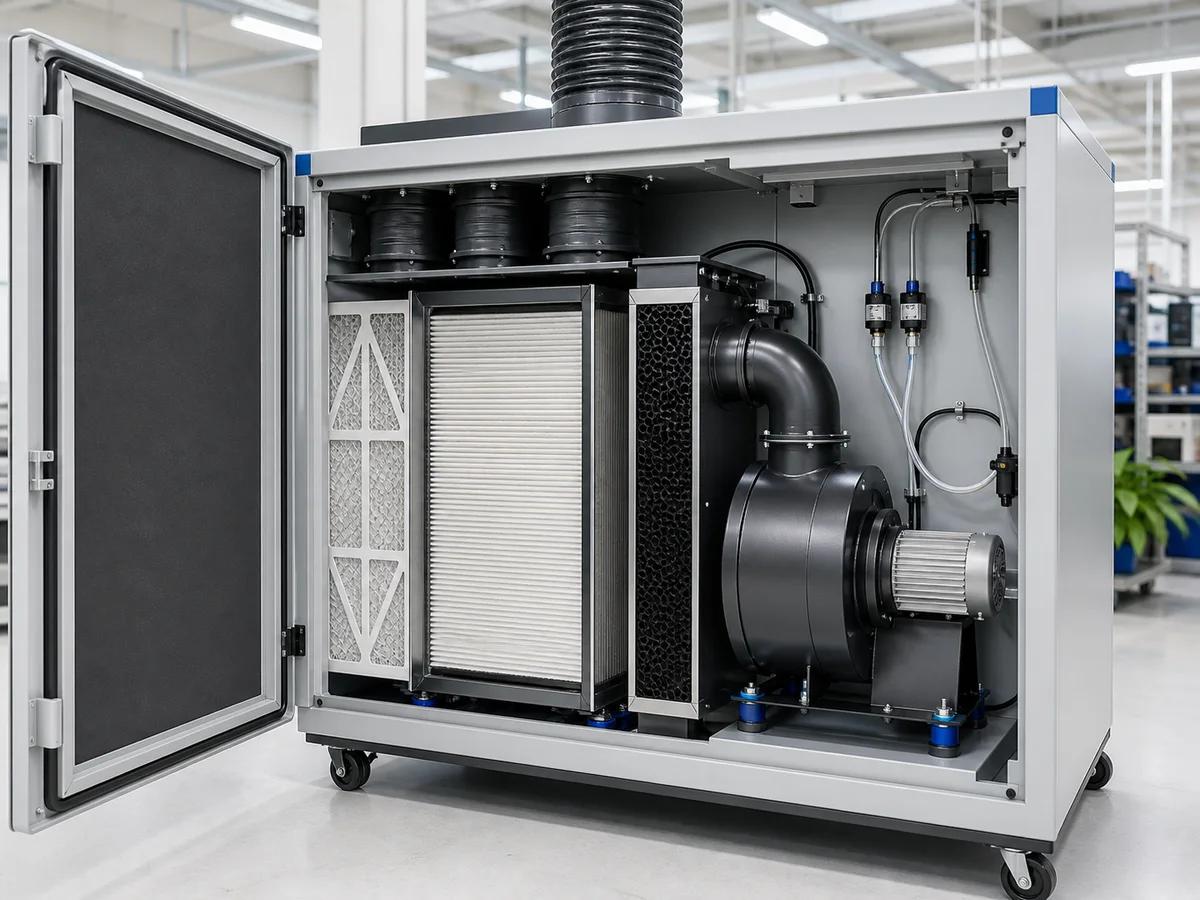
Airflow through the complete system
The blower generates stable negative pressure, rapidly drawing welding fumes, dust, and harmful particles into the filtration system to improve the working environment.
- Electronics soldering fume extractor
- PCB soldering workstation
- Laser-welding fume collection equipment
- Precision-machining fume extractor
- 01
Capture point
The extraction arm is positioned near the fume source.
- 02
Duct path
Contaminated air travels through the hose or manifold.
- 03
Filter stages
Particles and contaminants are retained by the filter media.
- 04
Extraction blower
Negative pressure is maintained across the complete path.
Recommended product range
Products for Solder fume extraction
This is an application-level product family. Select from the required capture airflow at both clean-filter and loaded-filter pressure loss; D-RG175 is not assigned to this application.
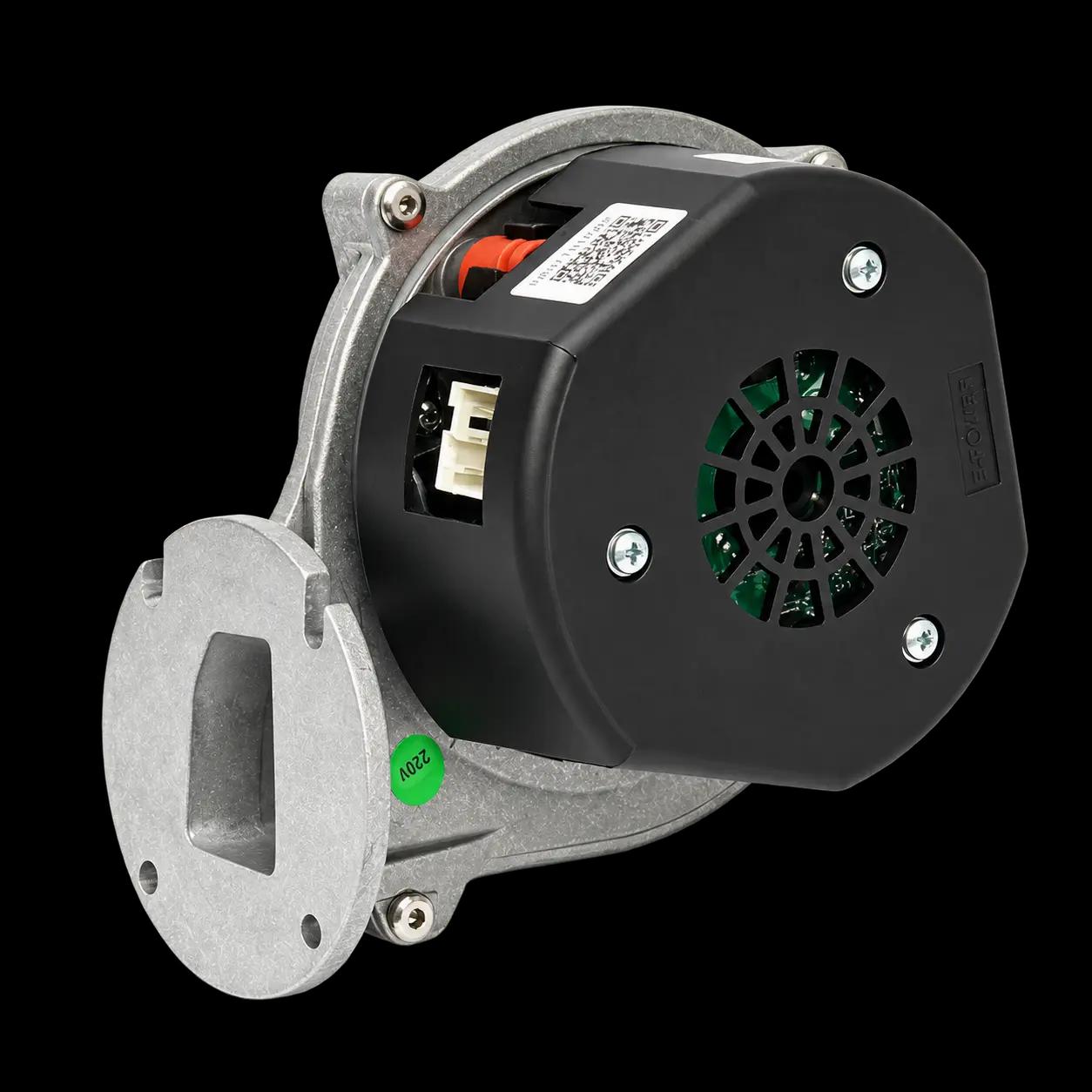
01 / 01
EC Gas Blowers
EC Gas Blower for Heating and Combustion Systems
High-efficiency EC gas blower designed for heating and combustion equipment, featuring advanced electronic control, stable airflow performance, low energy consumption and customizable solutions for OEM applications.
View product details
Bring us the equipment requirement
Send the target operating point and integration constraints. We will help evaluate a suitable blower direction and validation plan.
FAQ
Questions from equipment manufacturers
Can E-Power blowers be used in soldering fume and smoke extraction systems?+
E-Power blowers can be evaluated for a Soldering fume extractor, Solder fume extractor, Soldering smoke extractor, Soldering fume extraction system, or Solder fume extraction system. These systems need negative pressure at the capture point after accounting for hoses, nozzles, bends, filters, and enclosure leakage. Free-air volume alone can overstate real extraction performance. Selection should use the required airflow at the actual static pressure, then check noise, continuous duty, contaminant exposure, filter loading, maintenance access, motor protection, and performance as the filter resistance increases.
How should a blower be selected for a fume-filtration unit or extractor machine?+
A blower for Solder smoke extraction equipment, a Fume extraction unit, a Fume extractor machine, or a Fume filtration system should be selected from the combined fan and system curves. New and loaded filters must both be considered because resistance rises during use and moves the operating point. Engineers should define capture airflow, target negative pressure, duct losses, filter stages, leakage, duty cycle, acceptable noise, contaminant characteristics, cleaning intervals, and alarm strategy. Prototype tests should confirm extraction performance throughout the intended filter-service interval, not only with a new filter.
Does E-Power provide OEM or application-specific blower solutions?+
E-Power supports OEM blower projects and application-specific matching based on technical feasibility, expected volume, and validation requirements. As an OEM blower manufacturer, the company can discuss voltage, control logic, communication functions, wiring, connectors, mounting interfaces, outlet configuration, and supporting components for suitable projects. The process normally begins with requirements review, followed by model screening, drawing and interface confirmation, samples, prototype testing, approval, and controlled production release. Available customization scope, minimum quantity, tooling, validation responsibility, and lead time must be confirmed for each project rather than assumed from a standard model.
What information should I provide for blower selection or a quotation?+
For a useful model recommendation or quotation, provide the equipment type, target airflow and static pressure at minimum, rated, and maximum load, supply voltage and frequency, control signal, speed-feedback requirement, and expected annual quantity. Include installation drawings, inlet and outlet dimensions, connector details, operating temperature, moisture, dust, grease or chemical exposure, noise targets, duty cycle, and any current blower model or curve. Combustion projects should also include available gas-valve, premixer, burner, fuel, gas-pressure, heat-exchanger, and flue information for engineering review.