Choosing an EC centrifugal blower manufacturer: what buyers actually need to verify
If you are sourcing from an EC centrifugal blower manufacturer, the real question is rarely “Can they make a fan wheel?” It is whether they can make a blower component that fits the airflow target, survives the operating environment, and shows up consistently enough for production planning. That matters whether you are building HVAC equipment, an air purifier, a ducted ventilation system, or a machine that simply cannot afford unstable airflow.
The product in question here is the blower wheel or impeller itself, not a complete fan unit. That distinction is worth keeping in mind, because a wheel can look straightforward in a photo and still hide a long list of sourcing decisions: material choice, blade geometry, balancing, corrosion resistance, mounting interface, and how the part integrates with the motor and housing. Buyers often discover too late that a “similar” wheel is not actually interchangeable.
What the part appears to be, and why that matters
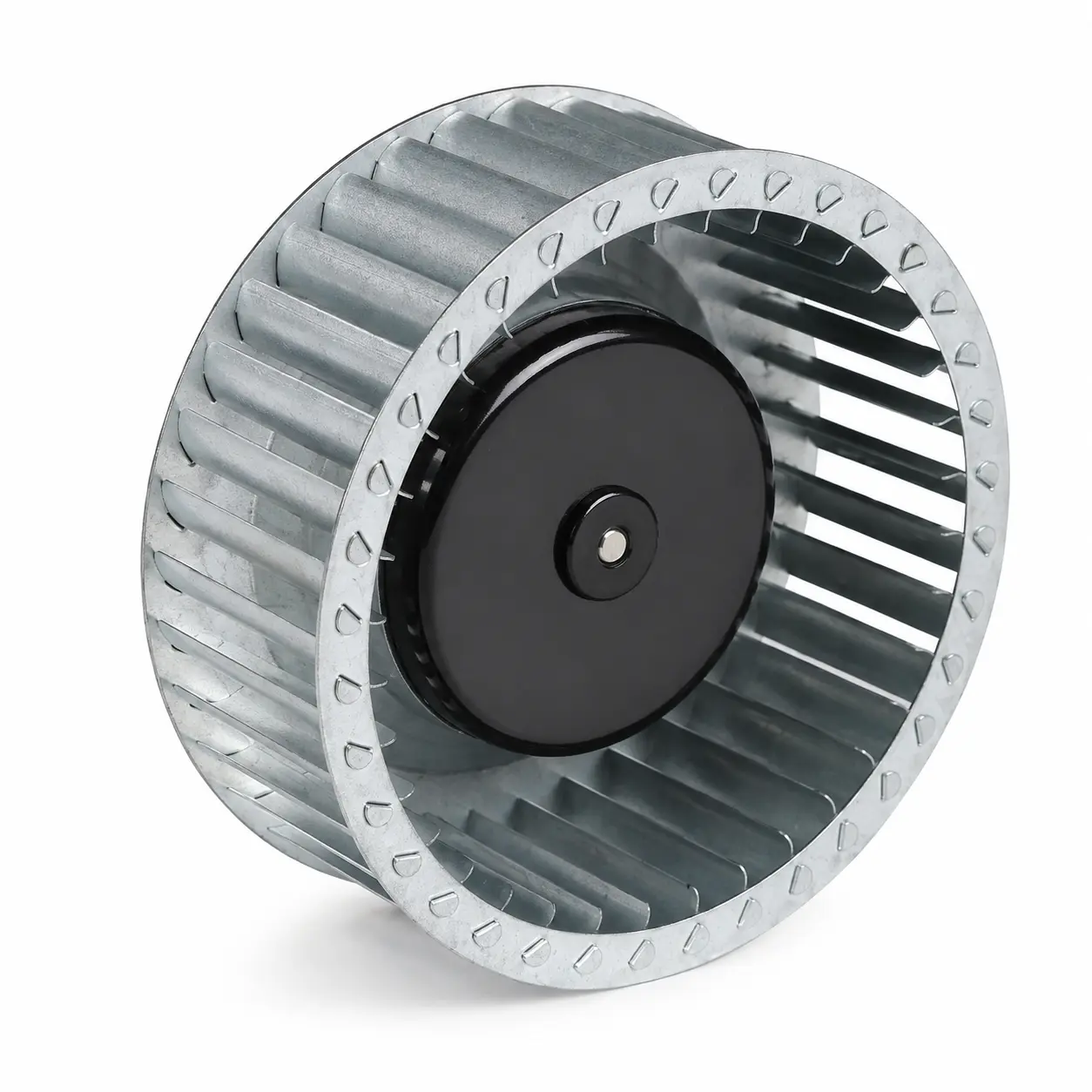
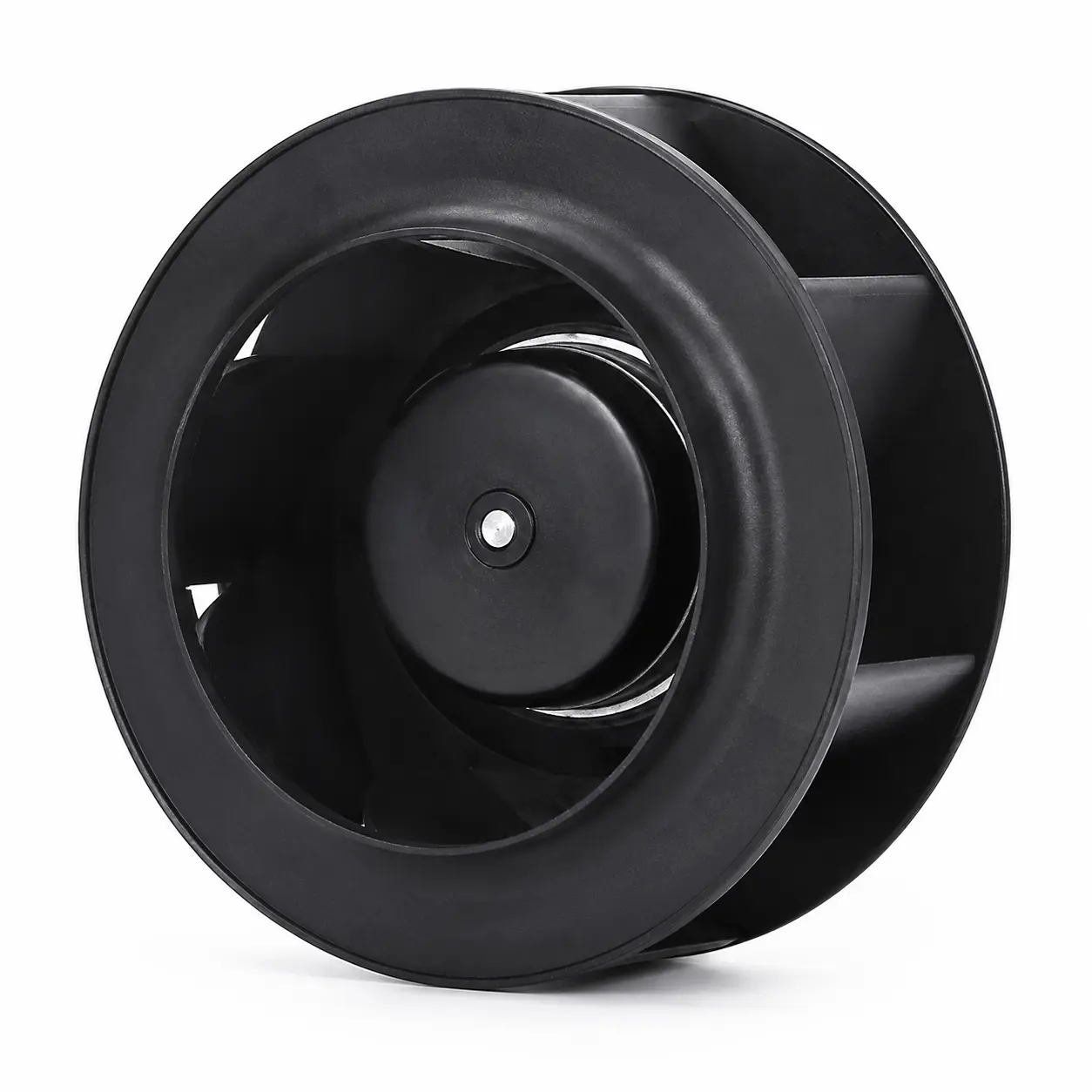
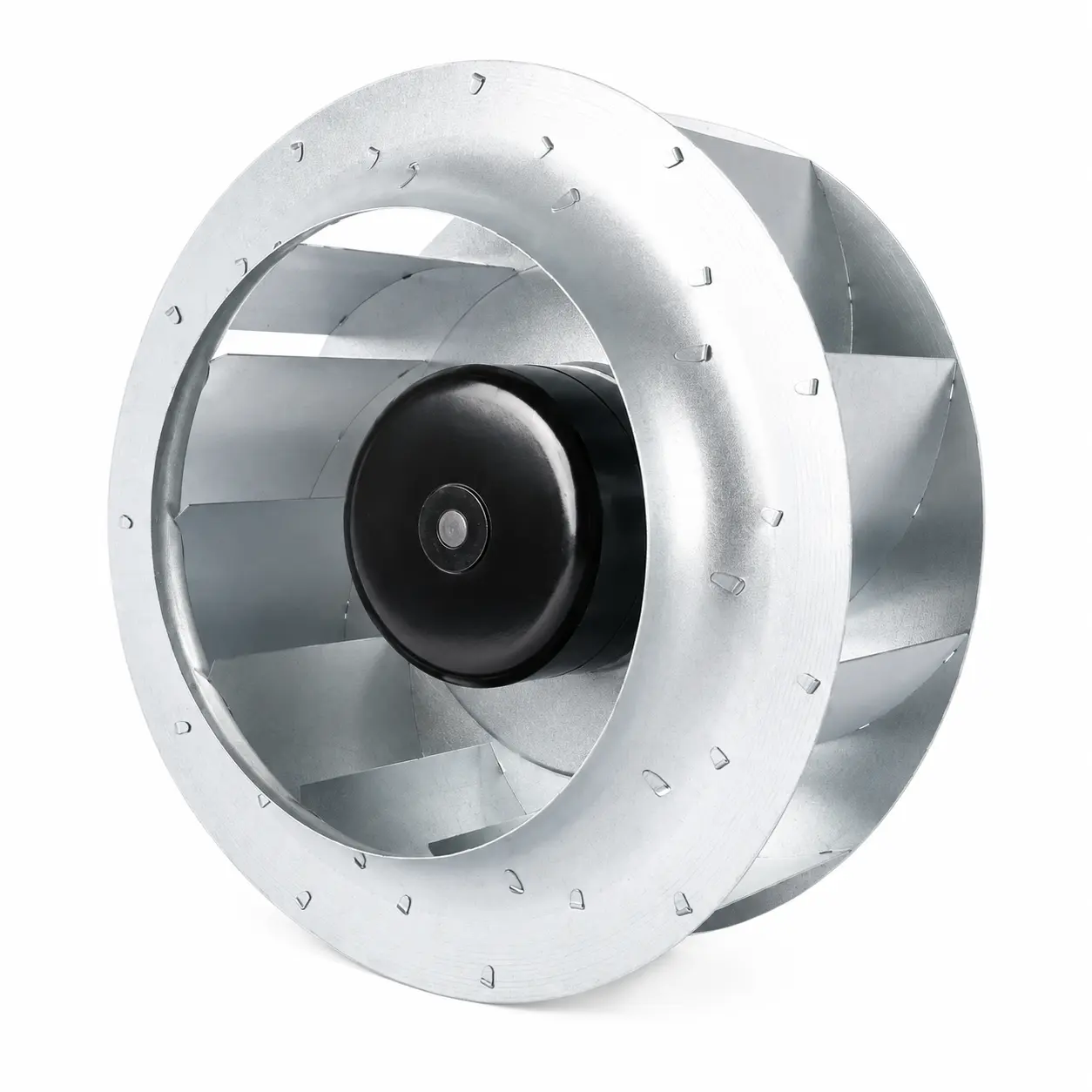
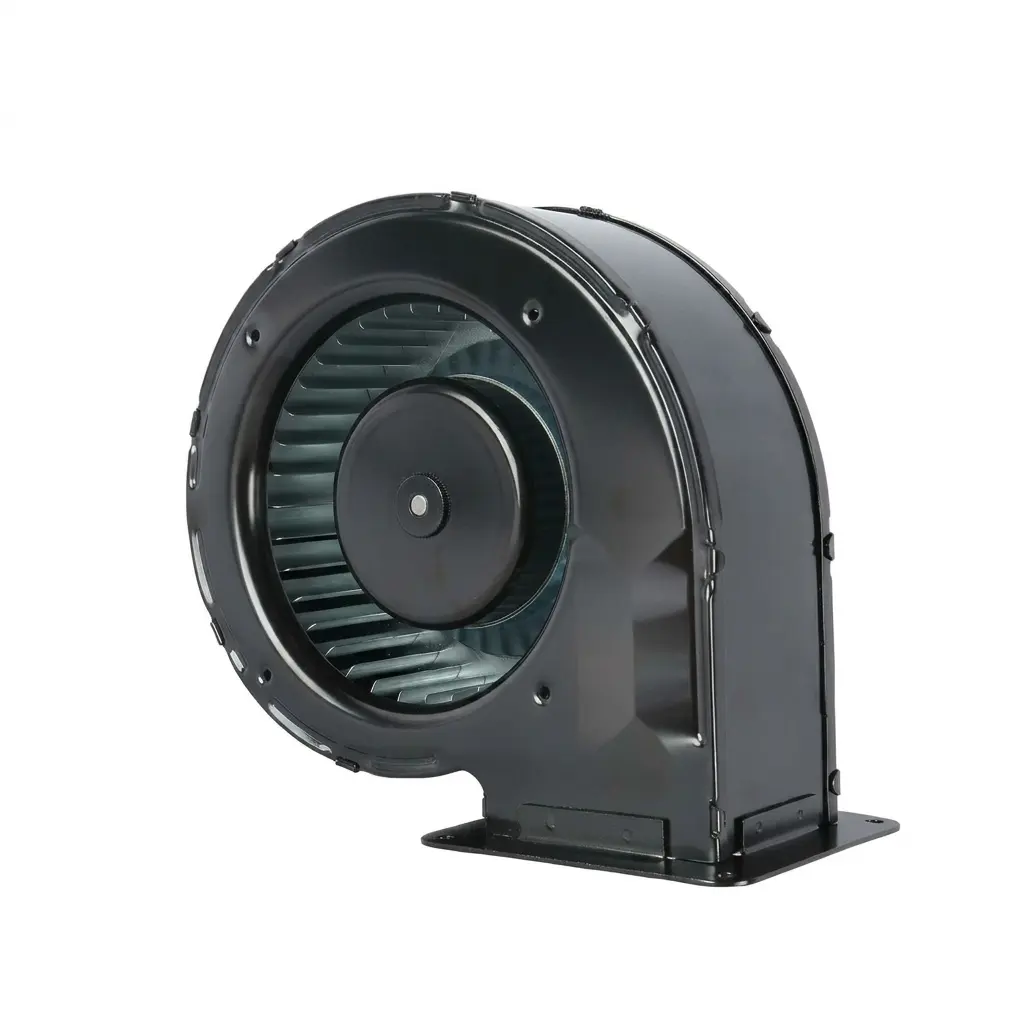
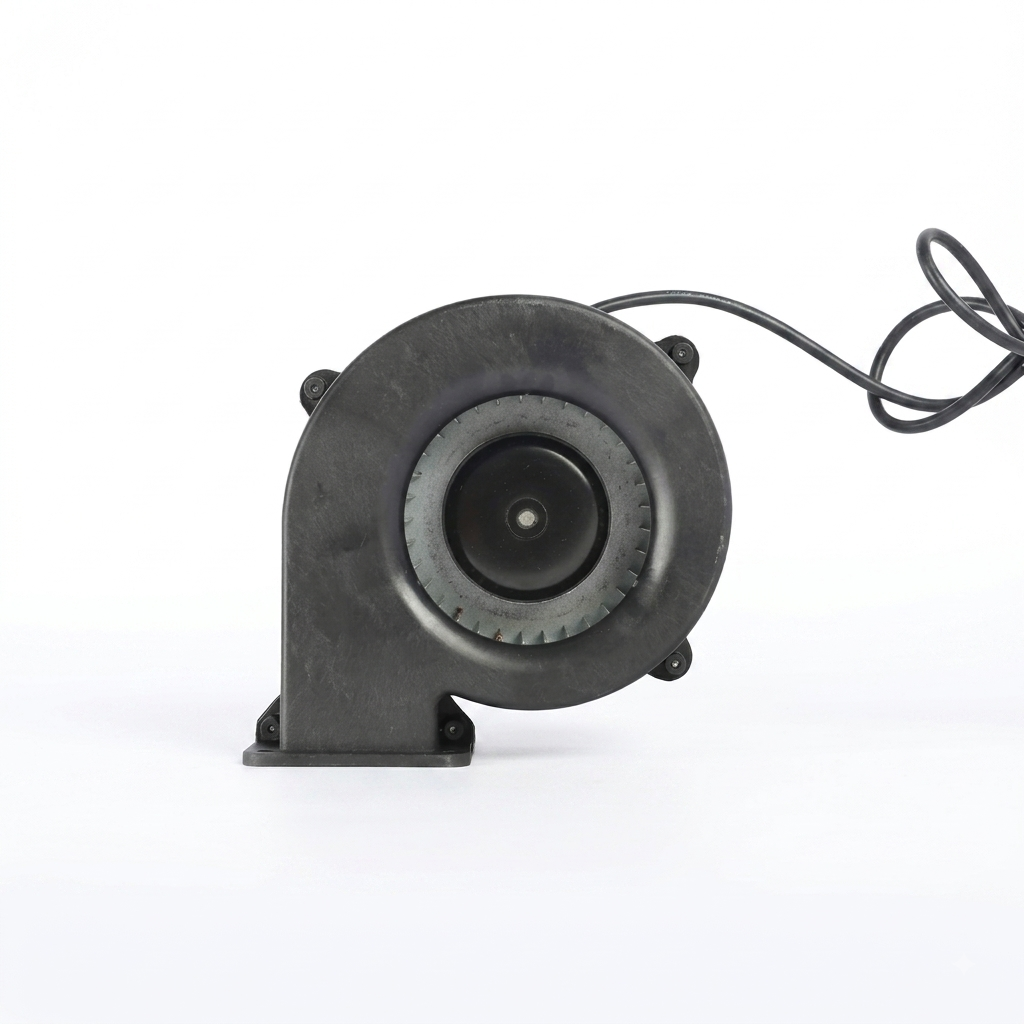
The visible component is a centrifugal fan blower wheel with a circular outer rim, closely spaced blades, and a central hub. The finish appears industrial rather than cosmetic, which is what you would expect from a galvanized steel or similar sheet-metal assembly. The black center hub suggests a coated or painted component, likely used for mounting or shaft connection.
That basic geometry tells you a few useful things. A wheel like this is meant to move air through a ducted system and create pressure, not just open-air circulation. In practice, that makes it relevant to equipment where airflow has to be controlled through filters, coils, ducts, housings, or process chambers. It is the kind of part that tends to sit quietly inside a product until something goes wrong, and then everyone notices.
Why EC centrifugal designs are drawing more attention
EC centrifugal blowers are popular because they combine centrifugal wheel behavior with electronically controlled motors. For buyers, that often translates into better controllability, improved energy use compared with older fixed-speed approaches, and easier system tuning. Of course, the motor is only part of the story. The wheel and housing still determine much of the real airflow behavior.
That is why a good EC centrifugal blower supplier should be able to discuss the whole assembly, not just the motor label. The buyer needs to know how the impeller is formed, how it is balanced, what materials are used, and how the manufacturer supports repeatability from one order to the next. A wheel that looks fine in isolation can still create noise, vibration, or pressure loss when paired with the wrong system curve.
Typical applications where this component makes sense
The supplied product information points to several common uses: HVAC systems, ventilation and exhaust equipment, air purifiers, industrial air treatment units, food-processing machinery, and medical or laboratory air-handling equipment. That list is broad, but not unusual.
In these sectors, the buyer is usually balancing a mix of performance and practical constraints. For example, a food-processing machine may need dependable airflow but also a finish and construction that hold up under frequent cleaning. A laboratory air-handling unit may care more about stable operation and predictable pressure than raw airflow volume. An HVAC builder may be focused on cost, repeatability, and system-level efficiency. The same wheel family can end up serving all of them, but not without careful specification.
What to ask before placing an OEM order
An OEM EC centrifugal blower purchase should start with fit, not price. That sounds obvious until you see how often sourcing teams are forced to compare parts that are only “roughly similar.” A buyer should ask for the following information before committing:
1. Wheel geometry and rotation details
The diameter, width, blade orientation, hub design, and rotation direction all affect performance. Some of these details are not visible in a photo, and they should not be guessed. If the supplier cannot clearly identify the wheel type, that is a warning sign.
2. Material and coating
The visible wheel appears to be made from galvanized steel or a similar sheet metal. That is common in industrial ventilation components, but it is still worth confirming. If the application involves humidity, cleaning chemicals, or airborne contaminants, coating choice matters more than many first-time buyers expect.
3. Mounting interface
The hub area is especially important for OEM use. Buyers need to know how the wheel connects to the shaft, whether the hub supports the intended assembly method, and whether the interface is standard or custom. The wrong mounting arrangement can create unnecessary rework during production.
4. Balance and noise expectations
The supplied image does not show balancing grade, vibration data, or noise performance, so do not assume them. For many applications, those figures are central to product quality. A supplier should be able to speak about balancing control in a way that matches your application, even if final values depend on the finished assembly.
How to evaluate an EC centrifugal blower manufacturer
Not every manufacturer should be judged by the same yardstick, but a few checks are consistent across most procurement programs.
First, look at production scale. The company notes an annual fan production capacity of 200,000 units. Capacity alone is not a quality guarantee, but it can indicate whether the supplier is set up for repeat orders rather than occasional custom work. For OEM buyers, that matters because production continuity is often more valuable than one impressive sample.
Second, review the compliance list carefully. The supplied information includes CCC, CE, LVD, RoHS, REACH, cUL, and ISO 9001. Those are useful signals, especially when products move across regions or into regulated equipment categories. Still, buyers should verify exactly which product lines or configurations are covered. A certification on one model does not automatically cover every custom variant.
Third, ask how the supplier handles product change control. If you are sourcing a blower wheel for a long-life equipment program, you need to know how material substitutions, tooling updates, or process changes are communicated. That is the sort of issue that rarely shows up in a brochure, but it can create expensive surprises later.
Common sourcing mistakes with blower wheels
One common mistake is treating the impeller as a commodity part. It is not. Even when two wheels look similar, small differences in blade form or rim construction can change operating behavior enough to upset the finished system.
Another mistake is overlooking the environment. A blower wheel for a standard HVAC unit may not be the right choice for food-processing equipment, laboratory handling, or applications exposed to moisture and cleaning agents. Buyers sometimes focus on airflow first and only later discover that corrosion resistance or maintenance access should have been given more weight.
A third issue is assuming the wheel is complete just because it is machined or stamped well. In reality, the surrounding assembly matters just as much. The motor control strategy, housing design, inlet conditions, and ducting all affect how the blower performs in service.
Quick buyer checklist
Before requesting samples or quotation, a practical buyer should confirm:
- the exact wheel type and whether it is for an OEM assembly
- material and finish expectations
- hub and shaft interface requirements
- application environment, including humidity or cleaning exposure
- required compliance documentation for the target market
- production volume and repeat-order expectations
This is not bureaucratic busywork. It is the fastest way to reduce back-and-forth and keep the sourcing process grounded in real engineering requirements.
Questions worth asking the supplier directly
If you are speaking with an EC centrifugal blower supplier, these questions usually separate a serious manufacturing partner from a reseller:
- Can you confirm the wheel construction and material specification?
- What types of ventilation or treatment systems do you typically support?
- Can you provide compliance documents for the exact product configuration?
- How do you manage sample approval and drawing confirmation for OEM projects?
- What information do you need from our team to quote a custom wheel correctly?
The answers do not need to be dramatic. In fact, the best answers are usually plain and specific. That is usually a better sign than glossy claims.
What a good next step looks like
For sourcing managers and product teams, the next step is not to order blindly from a catalog image. It is to build a short technical packet: intended application, envelope dimensions, airflow goals, mounting constraints, and any compliance requirements that apply in your market. With that in hand, a qualified manufacturer can tell you whether the shown blower wheel is a fit, whether a modified version is needed, or whether the application calls for a different centrifugal design altogether.
If you are evaluating an EC centrifugal blower manufacturer for OEM or industrial use, ask for the drawing, confirm the construction details, and compare the supplier’s production capability against your demand pattern. That is the practical route. It saves time, and more importantly, it avoids buying a part that looks right but behaves wrong once the system is running.