Why buyers still struggle to source a DC centrifugal blower
A DC centrifugal blower manufacturer is often the right starting point when a product team needs compact airflow, controlled speed, and lower power draw in a crowded enclosure. The difficulty is that “blower” gets used loosely in procurement conversations. Engineers may be looking for a centrifugal unit with higher static pressure, while sourcing teams may be comparing what is actually an axial fan assembly or a ducted ventilation component. That mismatch costs time, and sometimes leads to a design that underperforms once it is installed.
This matters because air-moving parts are rarely forgiving. If the geometry is wrong, noise rises, airflow drops off faster than expected, and the rest of the system absorbs the penalty. In HVAC modules, air purification equipment, food-processing cabinets, and medical air-handling devices, a small error in fan selection can ripple through thermal management, filtration, and service life. Buyers do not just need a supplier. They need a way to sort real blower capability from catalog language.
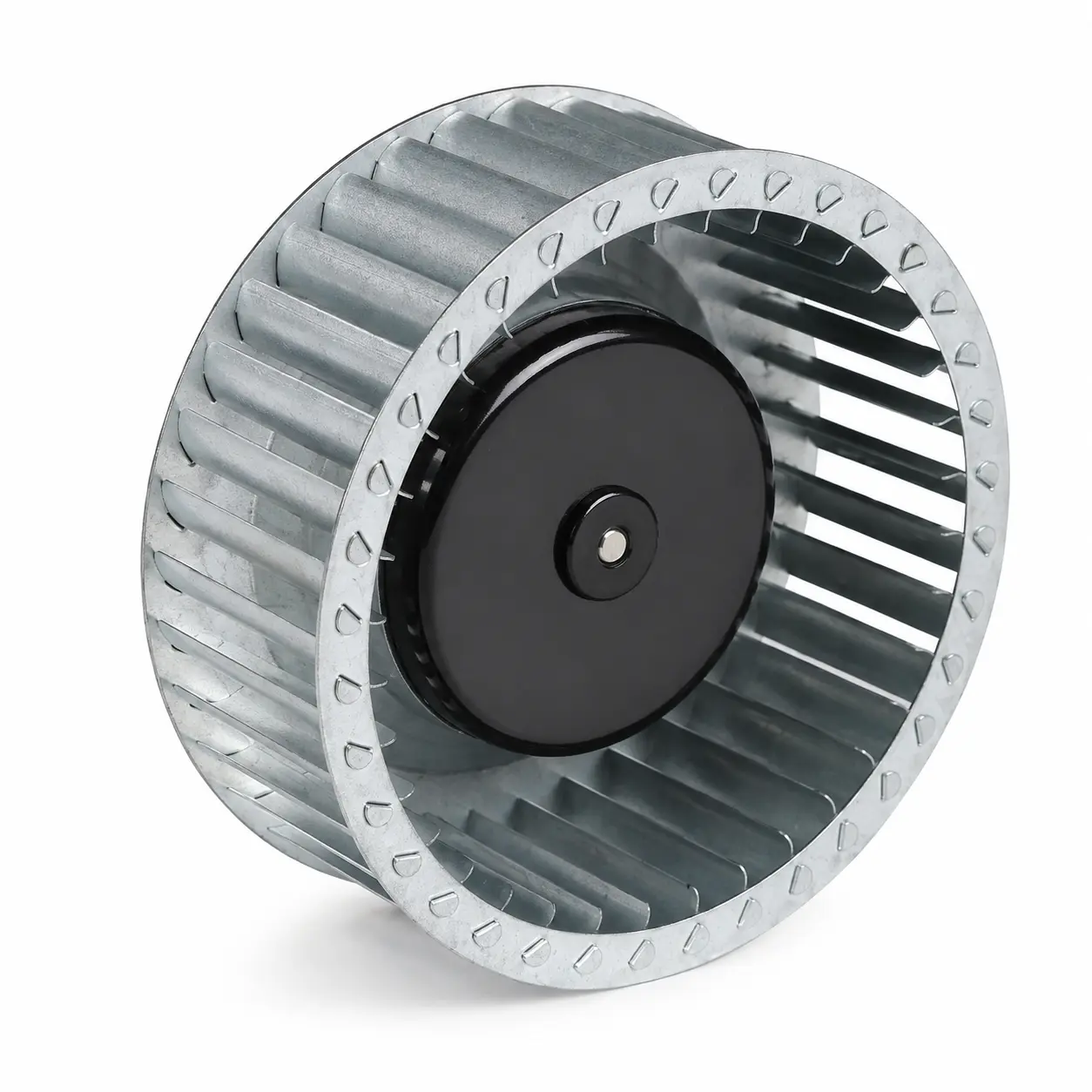
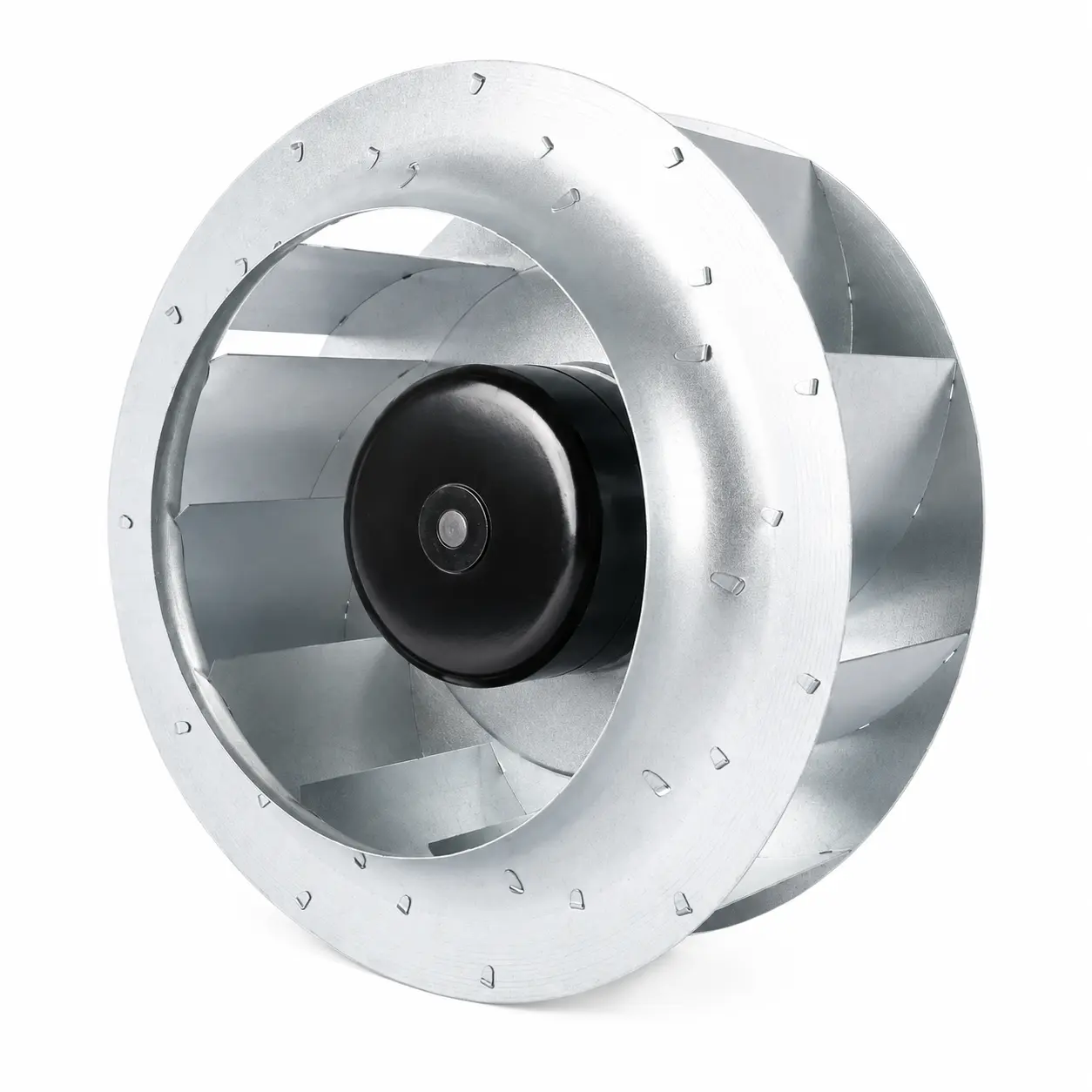
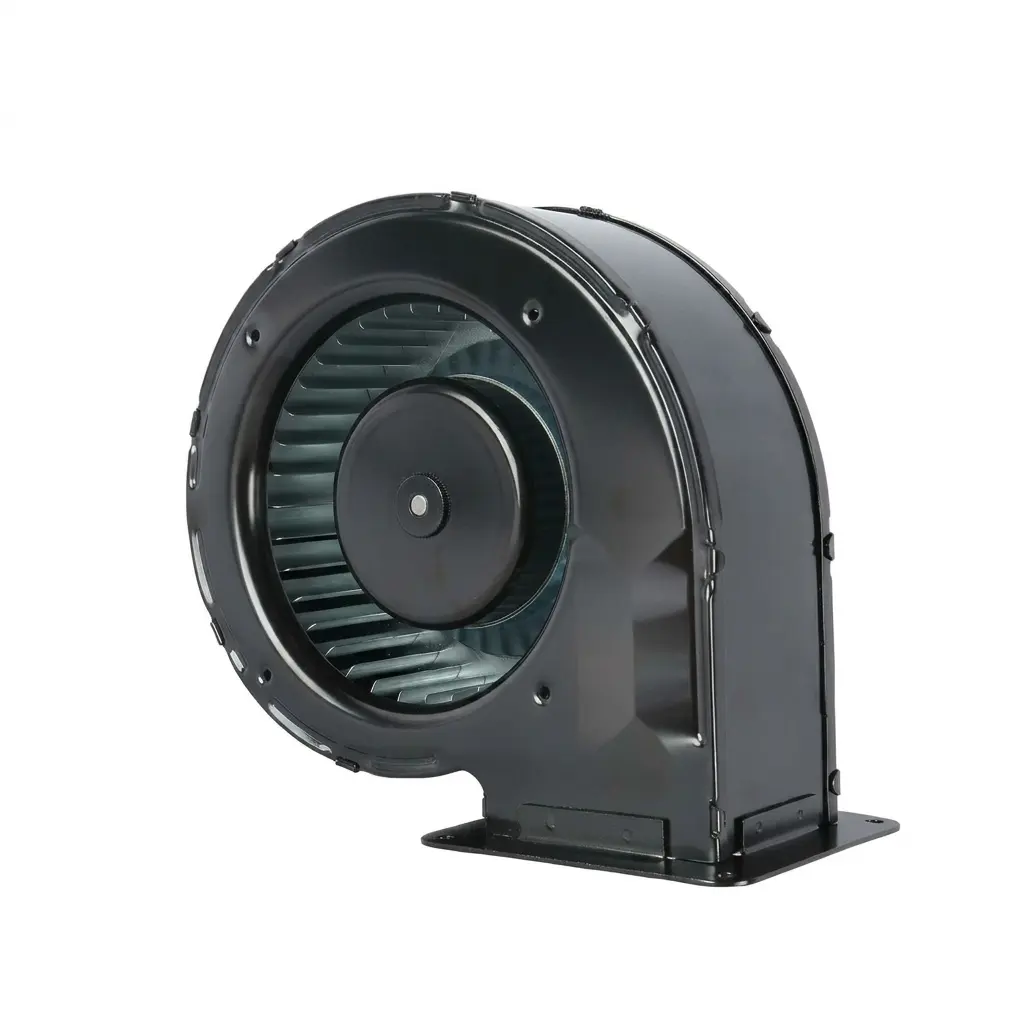
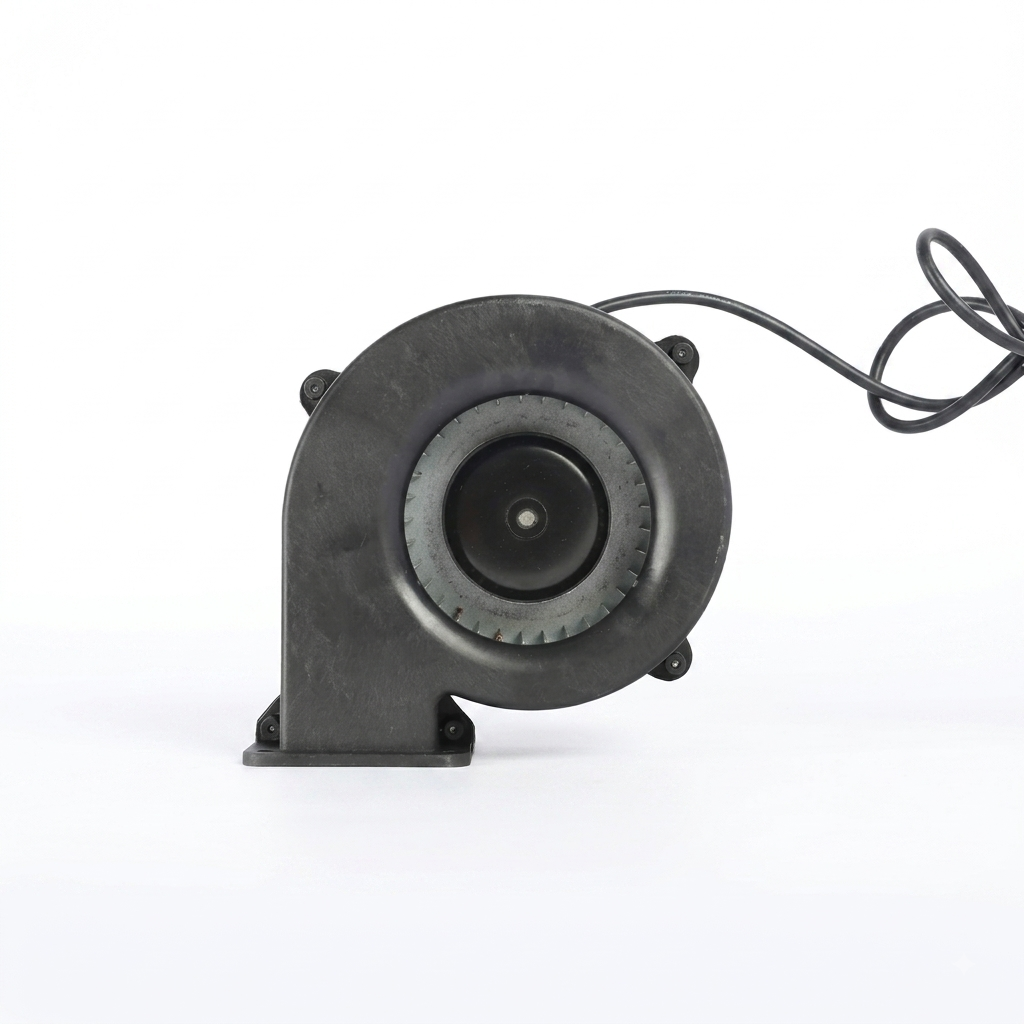
The product information available here describes an industrial ventilation fan or axial fan impeller assembly with a round, compact, duct-mount style housing, broad curved blades, and a central hub. That is an important clue: the visible construction suggests axial airflow rather than centrifugal flow. So the first practical step is to confirm whether you are buying a true centrifugal blower, an axial fan, or a custom air-moving subassembly built for a specific ducted system. The distinction affects pressure performance, packaging, and even mounting decisions.
Quick takeaways for engineering and sourcing teams
If you are reviewing a DC blower program, the buying decision usually comes down to four questions.
Does the airflow path need higher static pressure, or just steady volume?
Will the unit sit inside a tight housing, where diameter and depth matter more than free-air delivery?
Do you need a standardized component, or a custom DC blower solution tuned to your enclosure, voltage, and noise limits?
Can the supplier support compliance requirements for your target market without causing delays late in the project?
The supplied company notes say the manufacturer has an annual production capacity of 200,000 fans and lists CCC, CE, LVD, RoHS, REACH, cUL, and ISO 9001 compliance. Those are useful signals for buyers who need scale and a familiar documentation trail, though you should still verify scope for your exact model. Compliance listings on a company page do not replace a project-specific qualification pack.
What the visible product tells you about manufacturing
Based on the provided product description, the unit appears to use sheet metal construction, likely galvanized steel or aluminum, with a bright metallic finish and a dark central hub. The blades are evenly spaced and curved, and the assembly appears to be made for ducted airflow rather than free-blade circulation. In practical terms, that points to a product family that can be made efficiently through stamping, forming, balancing, and assembly.
That manufacturing approach is common in industrial ventilation because it can deliver repeatable geometry at volume. It is also one reason buyers often prefer a DC blower supplier that understands both the airflow side and the production side. A good design on paper can still become a poor procurement choice if the supplier cannot hold consistency across runs or cannot adapt the housing to your enclosure.
One caution here: the exact motor type is not verifiable from the available information, and the visible image does not prove whether the unit is a standalone impeller, a complete fan, or a subassembly. That uncertainty is not a flaw in the product; it is a reminder to ask for technical drawings before your team assumes the assembly architecture.
Centrifugal or axial: why the distinction matters
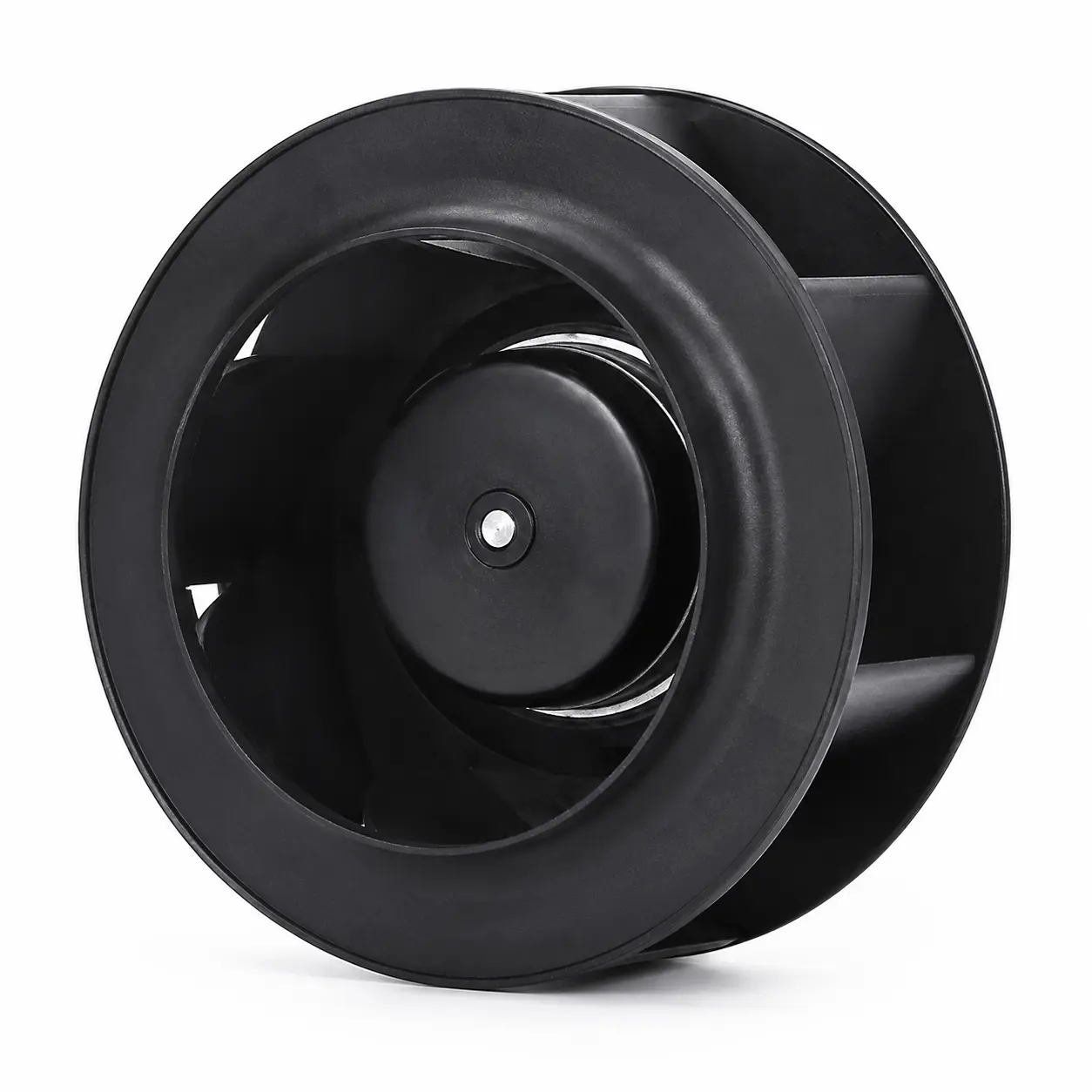
The term centrifugal blower usually implies a wheel that throws air outward and can generate stronger static pressure. That makes it useful where air has to move through filters, long ducts, bends, or dense heat exchangers. An axial fan, by contrast, moves air along the axis of rotation and is often favored for simpler ventilation paths, larger airflow volumes, and more compact packaging.
If you are sourcing for HVAC modules, industrial air purification systems, or medical equipment, this is not a semantic debate. It is a performance choice. A system that needs to overcome resistance will usually need a different fan family than a system that mainly needs circulation. Buyers sometimes over-specify speed and undervalue pressure. That is a common mistake, and it shows up later as overheated electronics or a cabinet that never quite clears its own heat load.
When to push for a custom solution
A custom DC blower solution becomes worthwhile when the off-the-shelf unit is close but not close enough. Typical triggers include unusual duct dimensions, strict noise limits, tighter power budgets, restricted installation depth, or the need to align with a controller already fixed in the platform design. In those cases, the better supplier is often the one willing to discuss impeller geometry, motor integration, housing shape, and connector details early.
That said, customization should not be used to hide a weak system requirement. Sometimes the better answer is to revise the duct path or filter design instead of asking the fan to compensate for poor airflow architecture.
What to ask a supplier before you commit
Sourcing teams tend to focus on price first, but with air-moving products, the questions that matter most are technical.
Ask for the operating point, not just the maximum airflow claim.
Ask whether performance data is based on free air or installed conditions.
Ask about noise behavior at the intended duty point, not only at top speed.
Ask how the fan is balanced and how repeatability is maintained in production.
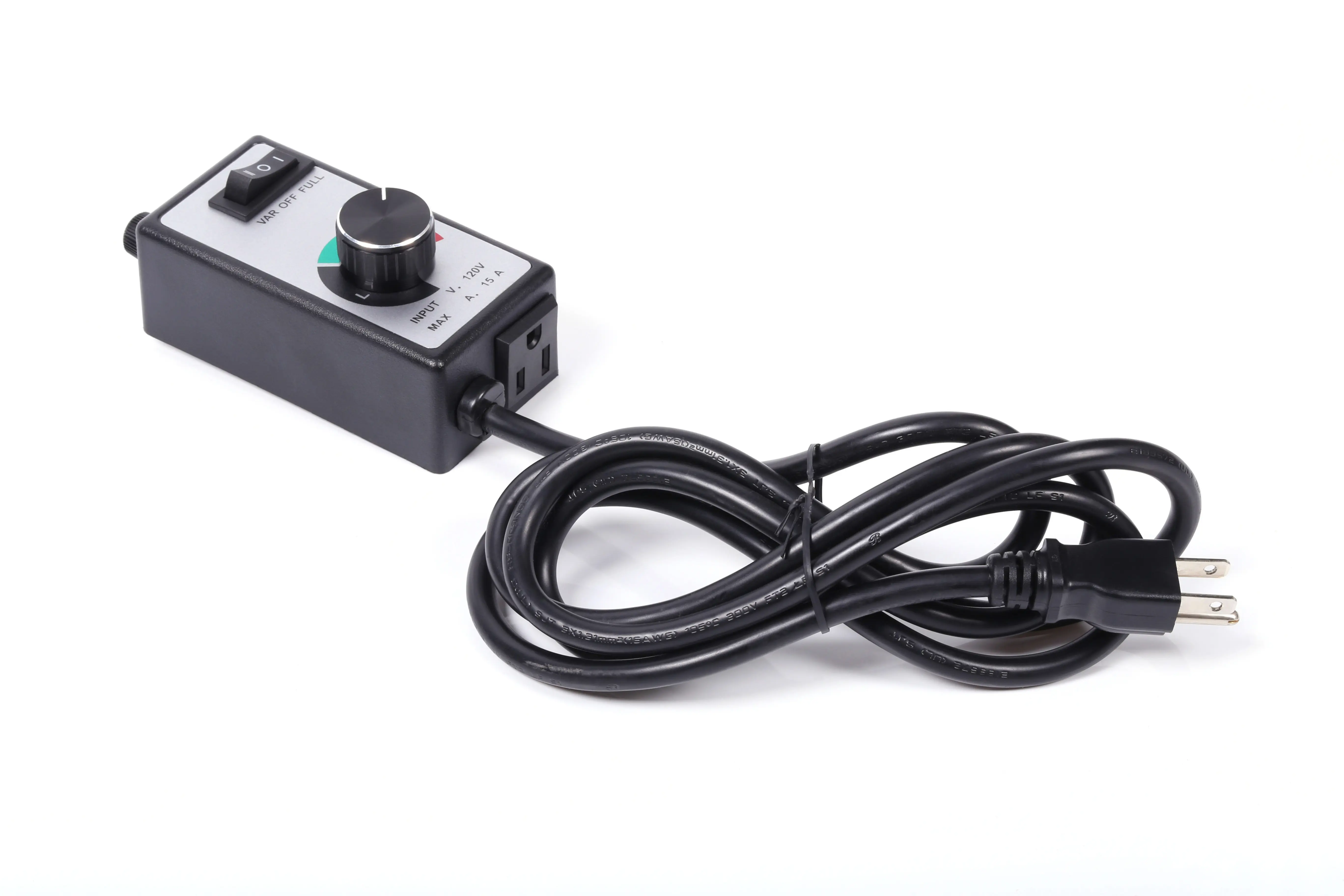
Ask whether the supplier can support the voltage and control method your product uses.
Ask what changes if the assembly needs to be adapted for a different grille, housing, or connector.
These may sound basic, but they are where many programs slip. A robust-looking fan can still be the wrong choice if the installation space forces turbulence or if the controller does not match the motor strategy.
Buyer-side quality checks that are easy to overlook
In the air-moving component market, “looks right” is not enough. A fan can pass a visual inspection and still create trouble once it is mounted. For that reason, buyers should pay attention to a few practical checks.
First, confirm dimensional consistency. Even a small shift in housing diameter, flange details, or hub profile can affect fit-up.
Second, verify material suitability. Galvanized steel, aluminum, and coated metal parts each behave differently in corrosion-prone or humid environments.
Third, ask how the assembly is protected during shipping. Bent blades or shifted hubs are not glamorous topics, but they are real receiving-room problems.
Fourth, check whether the supplier’s documentation is clear enough for your own QA team. If a vendor is producing 200,000 fans per year, that scale can be useful, but only if the paperwork is equally disciplined.
Common mistakes when comparing DC blower options
The most common mistake is comparing only voltage and size. Two fans with similar footprints can behave very differently once duct resistance is introduced.
Another mistake is assuming all “DC” products are equally efficient. Control electronics, motor design, blade geometry, and assembly quality all play a role.
A third mistake is buying for peak performance instead of operating reality. Many systems spend most of their life at partial load. If your supplier cannot describe behavior across the full range, you are making a bet rather than a purchase.
Finally, some buyers skip compliance checks until late. For industrial and export-oriented programs, that can create avoidable delays. The stated CCC, CE, LVD, RoHS, REACH, cUL, and ISO 9001 references are encouraging, but they still need to be matched to the exact article number you plan to buy.
Where this product family tends to fit best
From the application notes supplied, this kind of ventilation component fits well in HVAC systems, industrial air purification equipment, food-processing ventilation, medical equipment air handling, and general ducted airflow applications. Those are sensible use cases because they all depend on controlled air movement inside a defined path rather than open-air circulation.
The round, duct-mount style construction also suggests a product that values compact integration. That can be helpful when equipment designers are trying to keep the airflow module aligned with the duct axis and reduce dead space around the fan.
FAQ for purchasing teams
Is a DC blower always centrifugal?
No. The term gets used inconsistently in the market. Always confirm the actual airflow geometry.
What should I request from the supplier first?
Ask for drawings, performance curves, mounting details, and compliance documents tied to the exact model.
Is customization worth it?
Yes, when standard geometry does not match your enclosure, pressure target, or noise limit. But only if the supplier can support disciplined engineering changes.
How do I judge supplier capability?
Look for production scale, documentation quality, and the ability to explain manufacturing method clearly. Capacity is useful, but only when backed by repeatable process control.
Next step for buyers
If you are screening a DC centrifugal blower manufacturer, start by separating airflow requirements from product labels. Confirm whether your application truly needs a centrifugal design or whether an axial fan assembly will meet the duty point more efficiently. Then build your RFQ around performance, installation constraints, and compliance needs rather than a generic catalog description.
If you are evaluating a custom DC blower solution, ask for technical drawings and operating data early, before you lock in the housing or controller architecture. That simple step can prevent a lot of redesign later.
For teams that need a DC blower supplier with meaningful production scale, the stated annual output and compliance framework are worth reviewing, but they should be treated as the beginning of qualification, not the end of it. In this category, the details are what separate a workable supply arrangement from a noisy, inefficient headache after launch.