Why buyers care about a DC centrifugal blower manufacturer
Choosing a DC centrifugal blower manufacturer is rarely just a procurement exercise. For engineers, it affects airflow stability, thermal margins, acoustic behavior, and the space available inside the product. For sourcing teams, it affects repeatability, supply continuity, and how much engineering time gets spent correcting a fan-related issue after the prototype phase. And for product teams, it can decide whether a cabinet stays cool, a ducted system stays efficient, or a device passes usability tests without sounding cheap.
A DC centrifugal blower is often selected when air needs to be pushed through resistance: ducts, filters, compact housings, machine enclosures, and equipment with tighter flow paths. That makes the manufacturer’s role more important than many buyers first assume. The housing design, impeller geometry, motor integration, and assembly quality all influence real-world performance. On paper, two blowers may look similar. In practice, one can be quiet and stable while the other struggles once it sees a filter, bend, or load change.
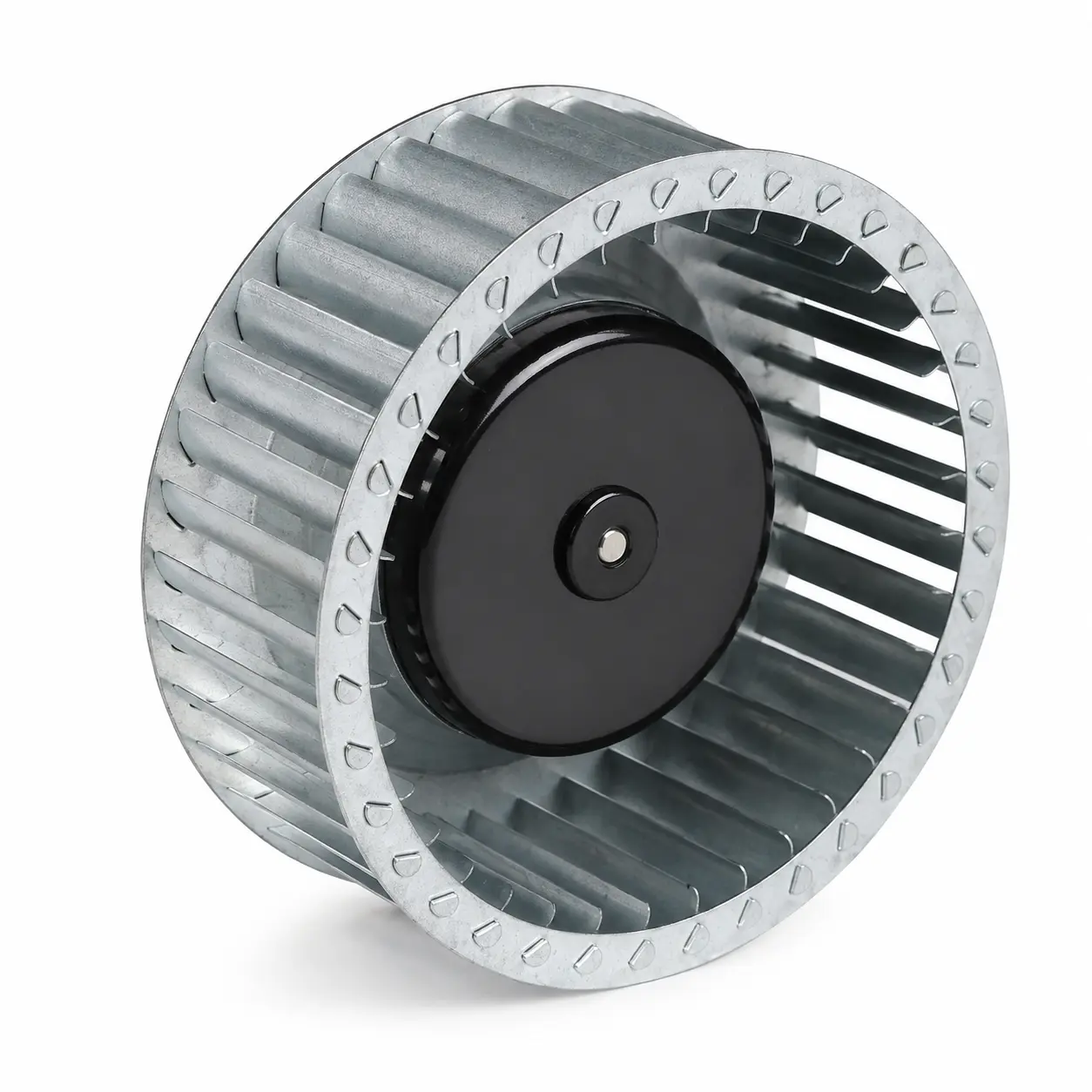
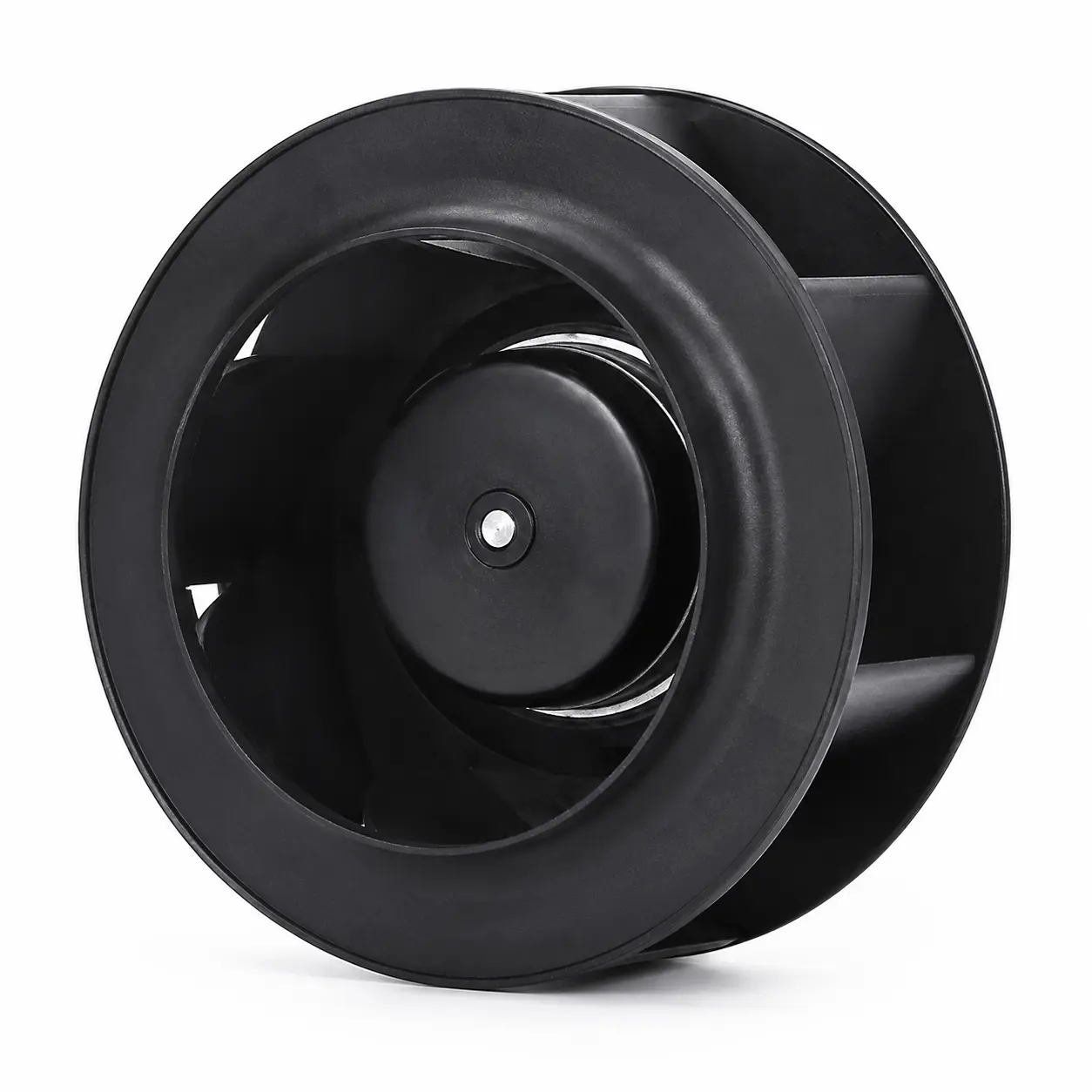
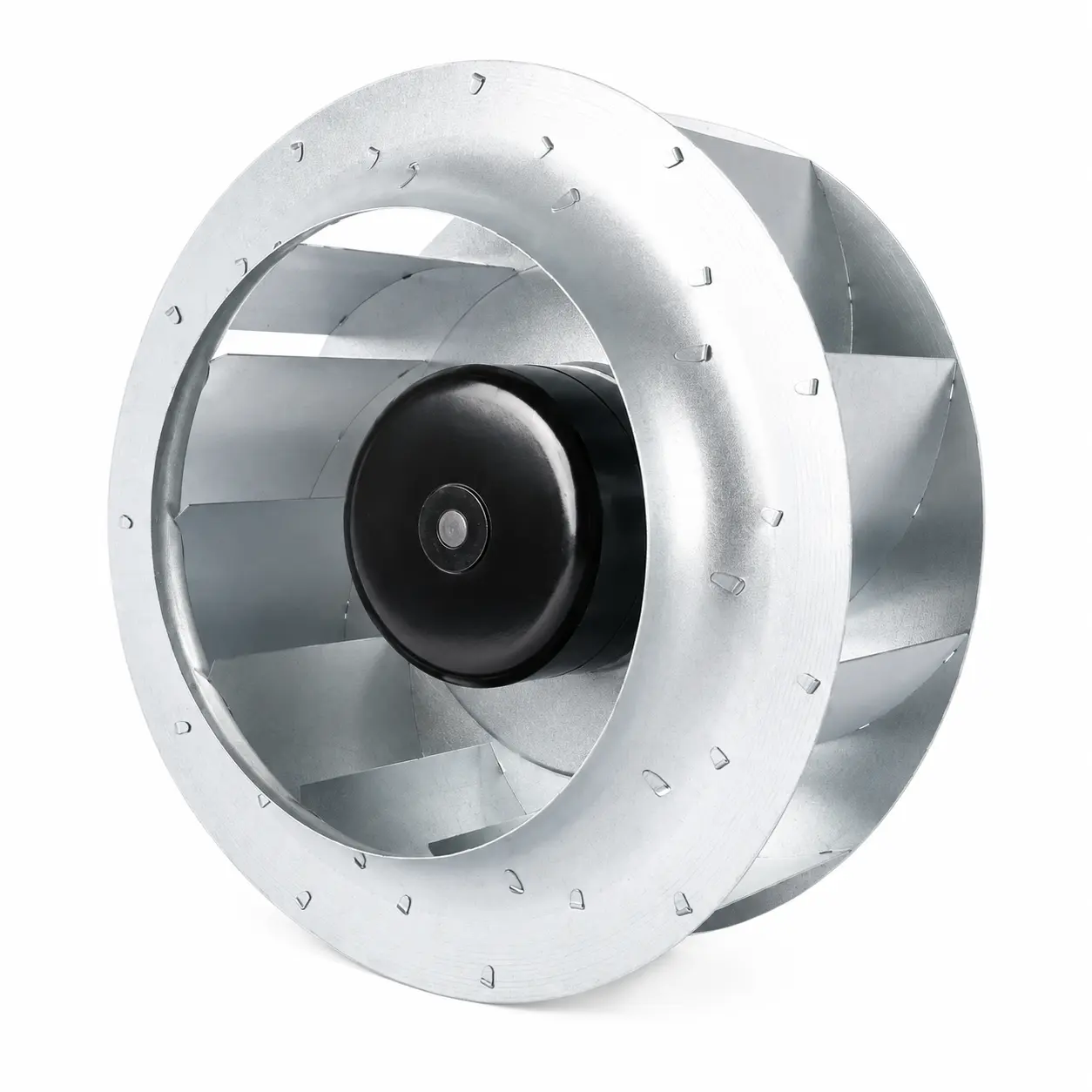
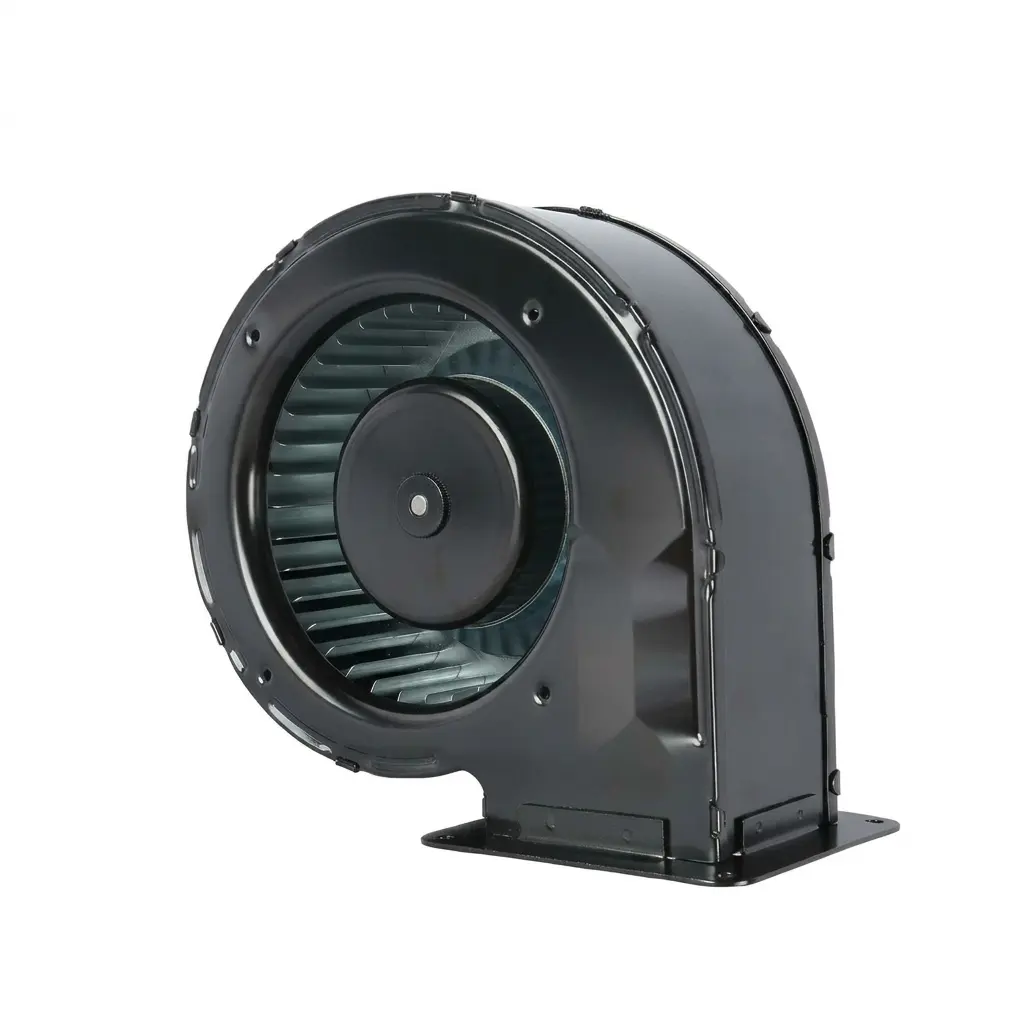
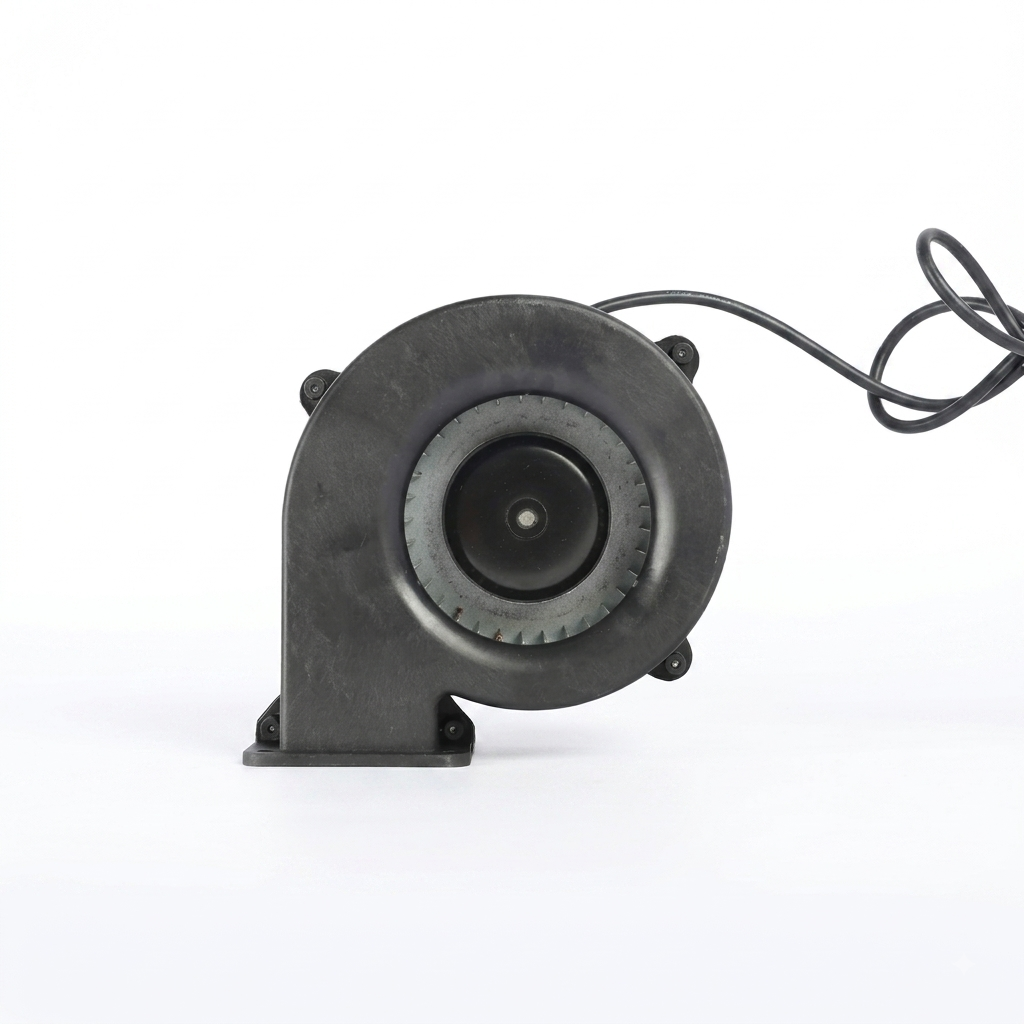
The image and supplied product notes point to an enclosed, compact fan module with a round inlet and internal blade wheel, likely a molded plastic or coated polymer assembly. That is the sort of format buyers often see in HVAC equipment, enclosure cooling, air purification units, and various industrial machines. The exact internal motor type is not visible, so it is better to treat the product as a blower module rather than assume too much about the drive system.
What a DC centrifugal blower is good at
A DC centrifugal blower is built to move air radially through a scroll or housing and deliver useful pressure in constrained systems. That makes it different from an axial fan, which is typically stronger in open-air circulation and weaker when static pressure rises. The distinction matters because many purchasing mistakes begin with selecting the wrong airflow style for the application.
For buyers, the practical question is simple: does the system need free-air circulation, or does it need air to travel through resistance? If the answer involves filters, ducting, heat exchangers, equipment cabinets, or long air paths, a centrifugal design is often the safer starting point. That is especially true in industrial ventilation and equipment cooling, where conditions are rarely ideal and the fan has to keep working after dust builds up or filters age.
The supplied notes also suggest use cases such as food-processing machinery, medical equipment, HVAC systems, and air purifiers. Those are all sectors where consistency matters more than peak brochure numbers. A blower that delivers dependable pressure and manageable noise can be more valuable than one that looks impressive in a short lab test.
Quick buyer takeaway: what to compare first
Before comparing brands or asking for samples, it helps to narrow the decision around a few basic points:
- Required airflow under actual system resistance, not just free-air numbers
- Available space for the blower body and inlet geometry
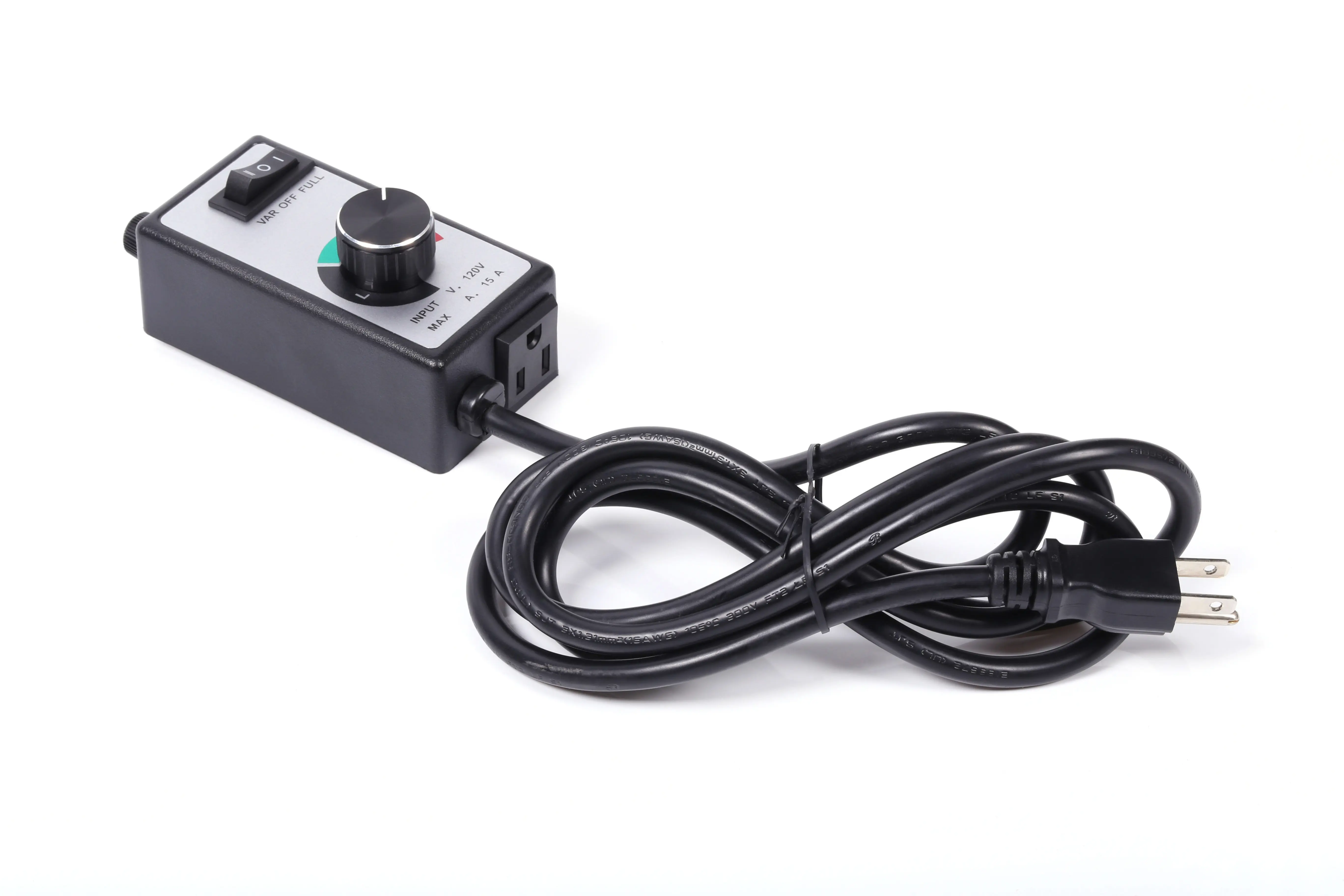
- Voltage and control method for the DC system
- Noise expectations for the end product
- Operating environment, including dust, heat, and duty cycle
- Documentation and quality consistency from the supplier
This is where a DC blower supplier earns or loses trust. If the supplier can help match the blower to the system rather than only quote a part number, the sourcing process tends to go more smoothly. If the supplier only talks in generalities, the buyer usually ends up doing more integration work later.
What the supplied company information suggests
From the provided notes, the manufacturer was established in 2001 and states an annual production capacity of 200,000 fans. That suggests a business with enough scale to support recurring orders, not just one-off sample runs. The notes also list claimed compliance with CCC, CE, LVD, RoHS, REACH, cUL, and ISO 9001. Those are meaningful signals in cross-border sourcing, but buyers should still verify the exact scope and current status for the specific model they plan to purchase.
A practical caveat: certificates and general company claims do not automatically prove that every blower suits every market or every use case. A purchasing team still needs to confirm model-specific documentation, electrical fit, and any application-specific requirements. In other words, the paper trail matters, but so does the part itself.
The production capacity note is also useful in a different way. Buyers planning a custom DC blower solution usually want some confidence that the supplier can handle steady replenishment after the initial design phase. A company with an established manufacturing base may be better positioned to support revisions, repeat orders, and quality feedback loops than a smaller trading operation with limited process control.
How to evaluate the blower itself
The visible product description points to a compact fan body with a circular inlet, central hub cover, internal blade wheel, and an enclosed housing. That kind of geometry is common in molded fan modules. The likely process category is injection-molded plastic housing and impeller assembly, possibly paired with an integrated motor unit. Because the internal motor type is not visible, buyers should not assume brushed, brushless, or any other specific architecture without confirmation.
That uncertainty is not a minor detail. Motor type affects control behavior, service life, efficiency, and sometimes noise. For that reason, a DC centrifugal blower manufacturer should be able to provide the technical details that are not visible in a photo: dimensions, electrical ratings, speed range, bearing arrangement, and any protection features that matter for the application. If those details are missing, the buyer is left guessing, and guessing is expensive once tooling or production begins.
The material note also matters. The pictured unit appears to use black molded plastic or a coated polymer housing and impeller. That can be a sensible choice for weight, cost, corrosion resistance, and manufacturability. Still, buyers should ask what polymer family or grade is used if the blower will face heat, chemical exposure, or long continuous duty. “Plastic” is not a complete specification.
When to ask for a custom DC blower solution
Not every project needs a custom design, but many do once the product matures. A custom DC blower solution is worth discussing when the default unit creates one of these problems:
- The cabinet is too shallow for an off-the-shelf blower
- The airflow path is awkward and creates pressure loss
- Noise must be reduced without shrinking the system performance too much
- The end product needs a specific mounting or interface geometry
- The project has an unusual duty cycle or temperature profile
In practice, custom work may mean revising the housing, adjusting impeller geometry, refining the motor package, or changing the interface around the module. It does not always mean starting from zero. Good suppliers often prefer to adapt a proven platform, which is usually safer than a fully fresh design. That approach can shorten development time and reduce risk, though exact lead times and engineering effort depend on the project and should be discussed directly.
Common mistakes buyers make
One of the most common mistakes is treating all centrifugal blowers as interchangeable. They are not. A blower that works in a clean demo enclosure may behave very differently once installed behind a filter or inside a hot cabinet. Another frequent error is focusing only on maximum airflow and ignoring pressure curve behavior. If the fan cannot hold useful output under the system’s real resistance, the headline number does not help much.
A second mistake is underestimating integration details. Mounting orientation, connector style, wiring length, and space around the inlet can all cause trouble. The product image does not show connectors or brackets, so those points should be clarified early. Buyers sometimes learn too late that a mechanically sound blower is awkward to install, which turns an otherwise good part into a production nuisance.
A third issue is neglecting supplier communication. A DC blower supplier should be able to answer technical questions clearly and consistently. If the answers shift from one email to the next, that is a warning sign. Engineers can tolerate a cautious supplier; they cannot tolerate a vague one.
Questions worth asking before you place an order
If you are comparing manufacturers, a short technical checklist can save time:
- Is the blower a finished product, a module, or a component intended for integration?
- What are the confirmed electrical and mechanical specifications for this model?
- Which certifications apply to this exact product version, not just the company?
- What materials are used in the housing and impeller?
- Can the supplier support a custom DC blower solution if the standard model is close but not exact?
- How does the supplier handle revisions, sample approval, and repeat orders?
These questions are not bureaucratic. They protect the project from late-stage surprises, especially when the blower is part of a larger assembled product.
Who is this kind of manufacturer best suited for?
A DC centrifugal blower manufacturer with established production capacity and a broad certification profile is often a fit for OEMs and industrial buyers who need a balance of scale and flexibility. That usually includes teams working on HVAC equipment, ventilation modules, air treatment systems, equipment cooling platforms, and specialized machinery.
If the application is highly sensitive, the buyer should take a more careful path: request drawings, confirm actual performance data, and review sample units in the target assembly. If the application is less demanding, the buyer may still benefit from the supplier’s production capacity and compliance claims, provided those claims are verified for the exact model.
Next step for sourcing teams
The safest way to move forward is to compare the blower against your system requirements, not just against another catalog part. Ask for the technical data that is missing from the photo, confirm the relevant certifications, and decide whether a standard module is enough or whether a custom DC blower solution would reduce integration risk.
If the supplier can support both standard and customized supply, that is worth serious attention. In this category, the best vendor is often the one that helps you avoid redesign work later, not the one that simply quotes fastest.