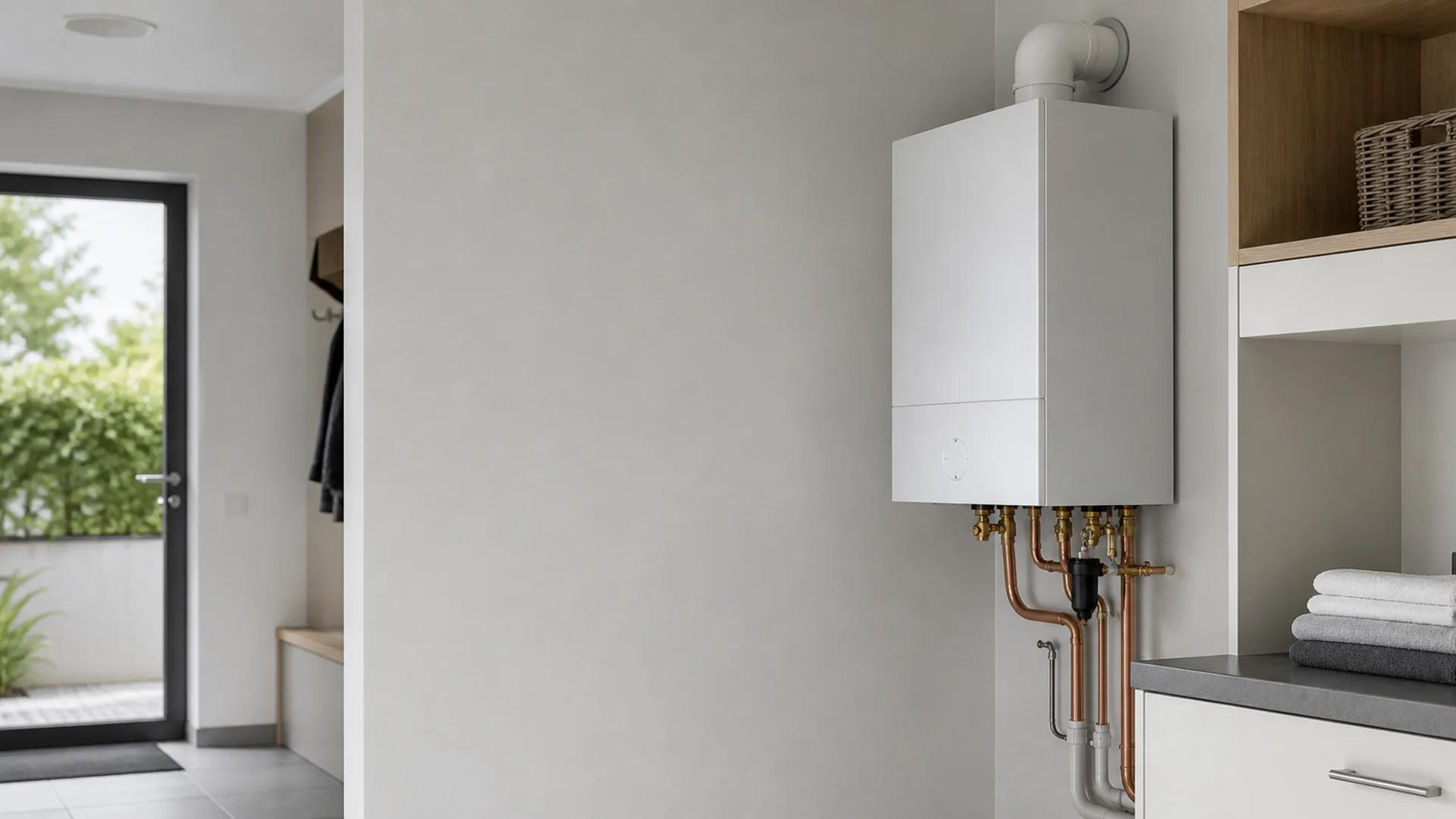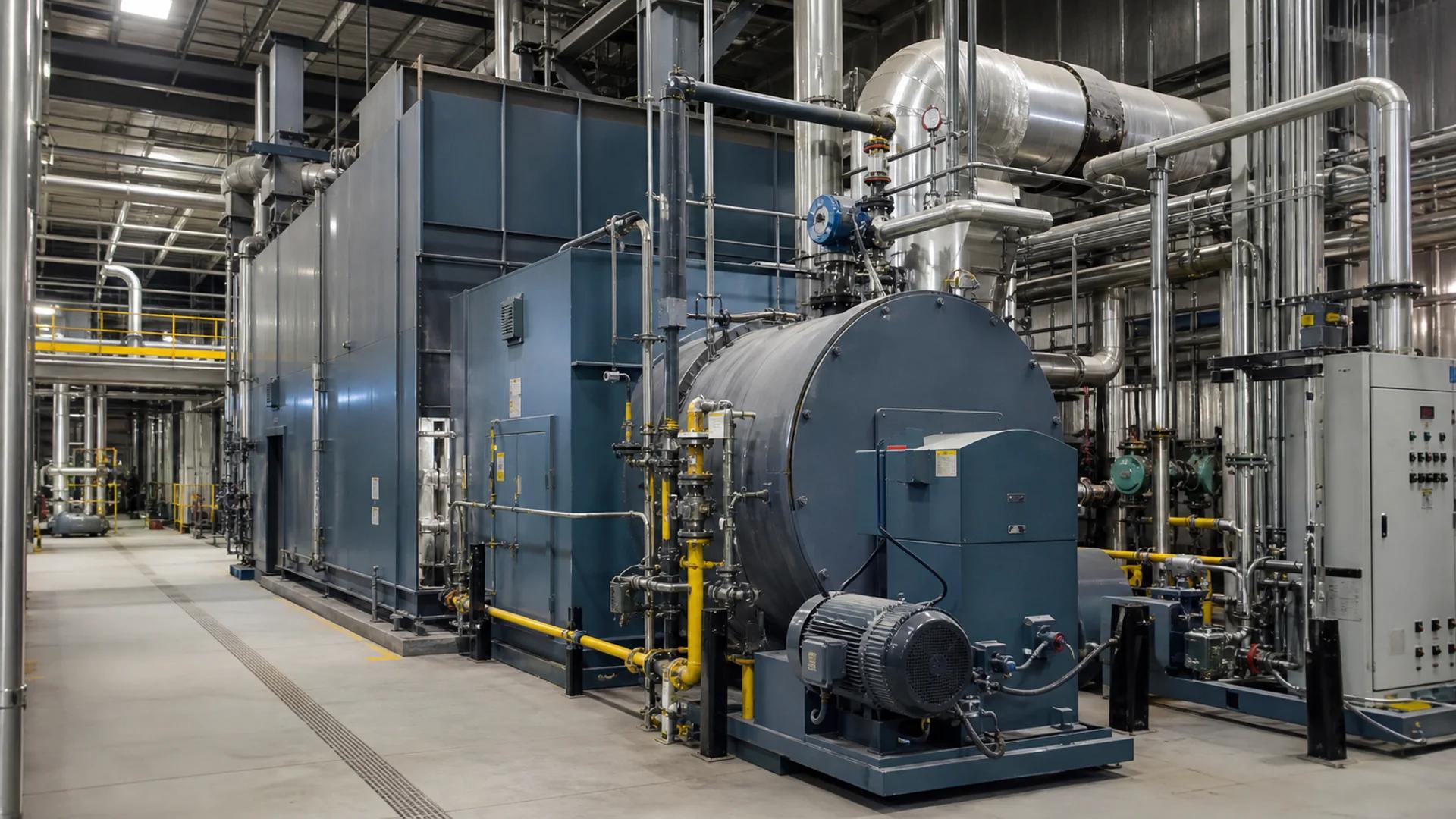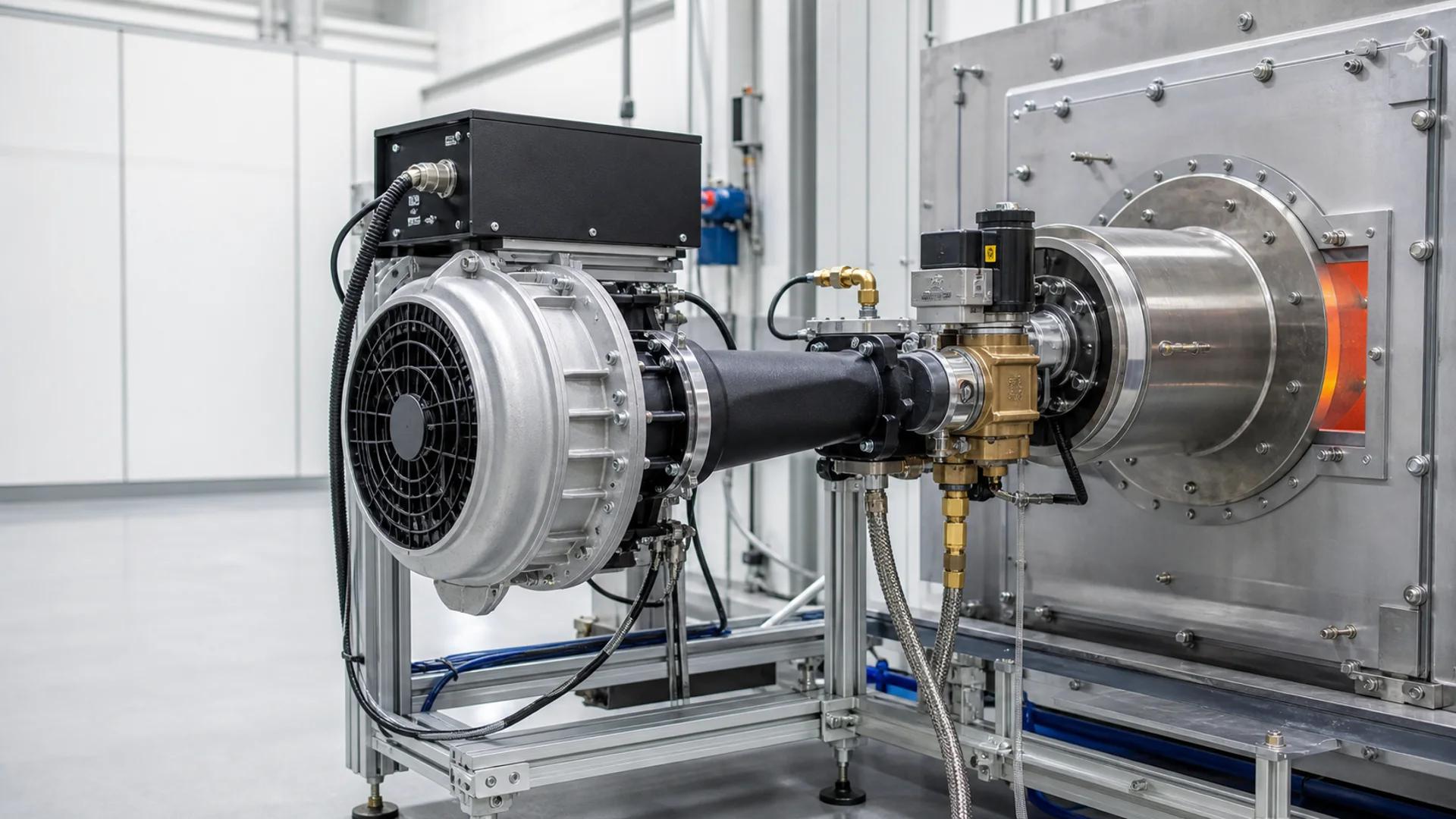

Commercial Boilers
Stable combustion air for commercial condensing and modular boilers. E-POWER blowers combine wide-range speed control with quiet, reliable operation under varying loads.
What the blower does
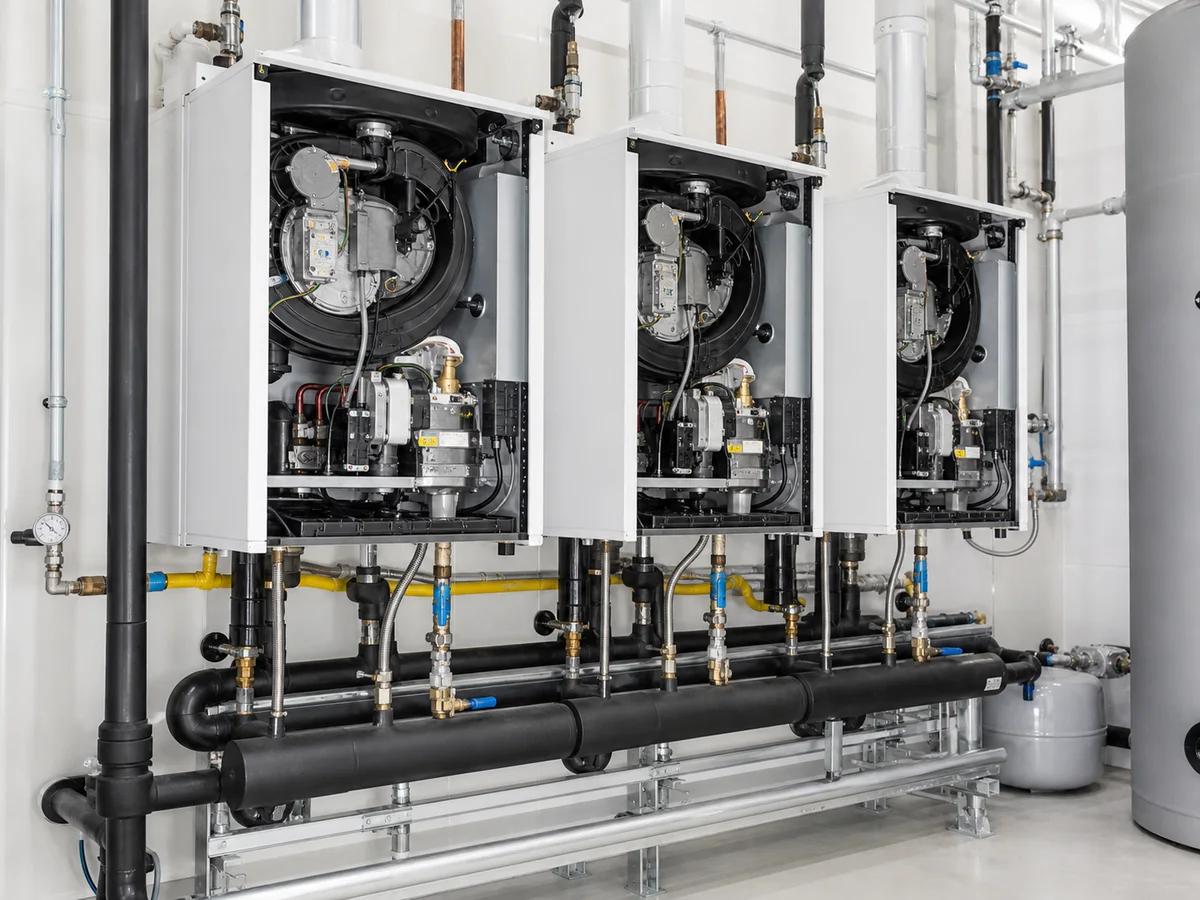
Airflow through the complete system
Provides a stable supply of combustion air, improving boiler efficiency and supporting continuous operation under high loads.
- Commercial condensing boiler
- Modular boiler
- 01
Plant demand
The building controller determines required boiler capacity.
- 02
Module controller
Individual boiler modules are staged and modulated.
- 03
Combustion blower
Each active module receives controlled combustion air.
- 04
Common heating circuit
Combined output follows the facility demand.
Recommended product range
Products for Commercial boilers
Start from required airflow at static pressure, then coordinate voltage, modulation range, Venturi, gas valve and heat-exchanger resistance.
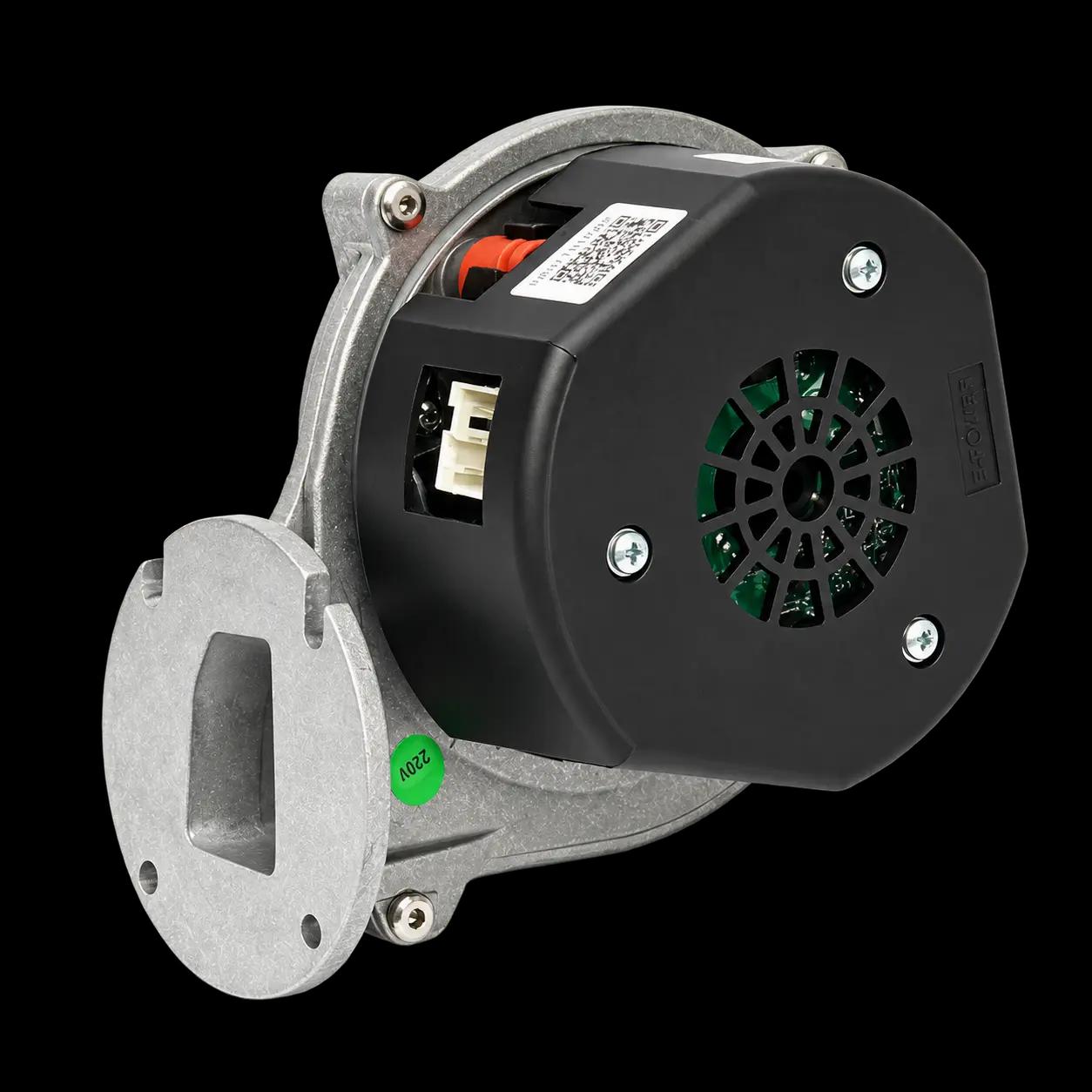
01 / 01
EC Gas Blowers
EC Gas Blower for Heating and Combustion Systems
High-efficiency EC gas blower designed for heating and combustion equipment, featuring advanced electronic control, stable airflow performance, low energy consumption and customizable solutions for OEM applications.
View product details
Bring us the equipment requirement
Send the target operating point and integration constraints. We will help evaluate a suitable blower direction and validation plan.
FAQ
Questions from equipment manufacturers
Are E-Power blowers suitable for commercial boilers and gas water heaters?+
E-Power blowers can be evaluated for a Commercial boiler, Commercial gas boiler, Commercial condensing boiler, Commercial heating boiler, Commercial hot water boiler, or High-efficiency commercial boiler. They may also support a Commercial gas water heater or Condensing water heater when the required curve, control, and installation conditions match. E-Power works with customers such as a commercial condensing boiler manufacturer or commercial gas water heater manufacturer; it does not manufacture the complete appliance. Continuous duty, hot surfaces, flue resistance, modulation, condensate risk, noise, and complete-equipment testing must be reviewed for each project.
How should blowers be selected for modular and cascade boiler systems?+
Blowers for a Modular boiler, Modular gas boiler, Modular condensing boiler, Cascade boiler, or Boiler cascade system must be matched at both unit and plant level. A modular condensing boiler manufacturer should provide each module's minimum, rated, and maximum duty points, as well as sequencing logic, common-header pressure behavior, flue arrangement, and control interfaces. Matching one module at full load is not enough because several modules may start, stop, or modulate together. Prototype and system tests should cover these transitions, shared backpressure, acoustic interaction, and fault recovery.
Does E-Power provide OEM or application-specific blower solutions?+
E-Power supports OEM blower projects and application-specific matching based on technical feasibility, expected volume, and validation requirements. As an OEM blower manufacturer, the company can discuss voltage, control logic, communication functions, wiring, connectors, mounting interfaces, outlet configuration, and supporting components for suitable projects. The process normally begins with requirements review, followed by model screening, drawing and interface confirmation, samples, prototype testing, approval, and controlled production release. Available customization scope, minimum quantity, tooling, validation responsibility, and lead time must be confirmed for each project rather than assumed from a standard model.
What information should I provide for blower selection or a quotation?+
For a useful model recommendation or quotation, provide the equipment type, target airflow and static pressure at minimum, rated, and maximum load, supply voltage and frequency, control signal, speed-feedback requirement, and expected annual quantity. Include installation drawings, inlet and outlet dimensions, connector details, operating temperature, moisture, dust, grease or chemical exposure, noise targets, duty cycle, and any current blower model or curve. Combustion projects should also include available gas-valve, premixer, burner, fuel, gas-pressure, heat-exchanger, and flue information for engineering review.