
Solder Fume Extraction
Consistent suction for soldering and precision-processing workstations. E-POWER blowers help maintain fume capture through ducts and filters as system resistance changes.
What the blower does
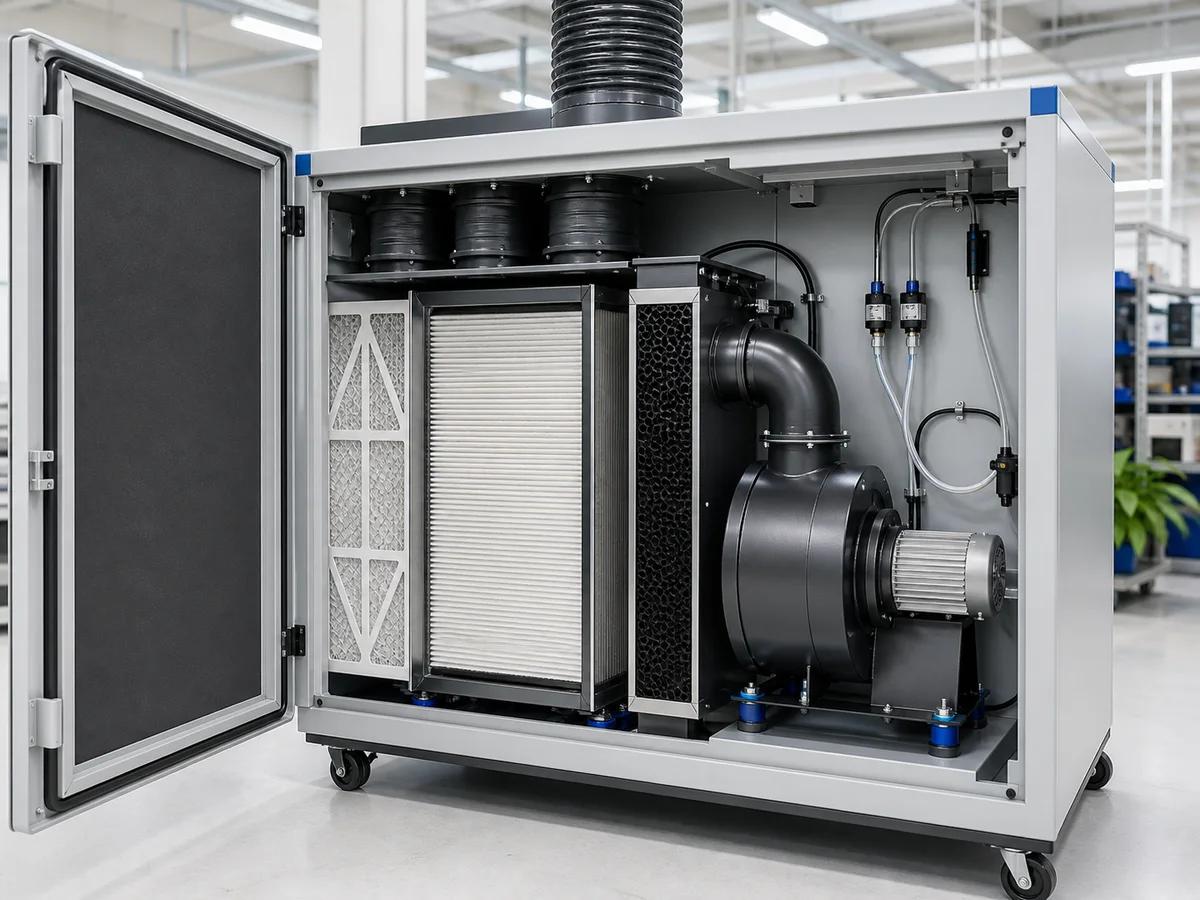
Airflow through the complete system
The blower generates stable negative pressure, rapidly drawing welding fumes, dust, and harmful particles into the filtration system to improve the working environment.
- Electronics soldering fume extractor
- PCB soldering workstation
- Laser-welding fume collection equipment
- Precision-machining fume extractor
- 01
Capture point
The extraction arm is positioned near the fume source.
- 02
Duct path
Contaminated air travels through the hose or manifold.
- 03
Filter stages
Particles and contaminants are retained by the filter media.
- 04
Extraction blower
Negative pressure is maintained across the complete path.
Recommended product range
Products for Solder fume extraction
This is an application-level product family. Select from the required capture airflow at both clean-filter and loaded-filter pressure loss; D-RG175 is not assigned to this application.
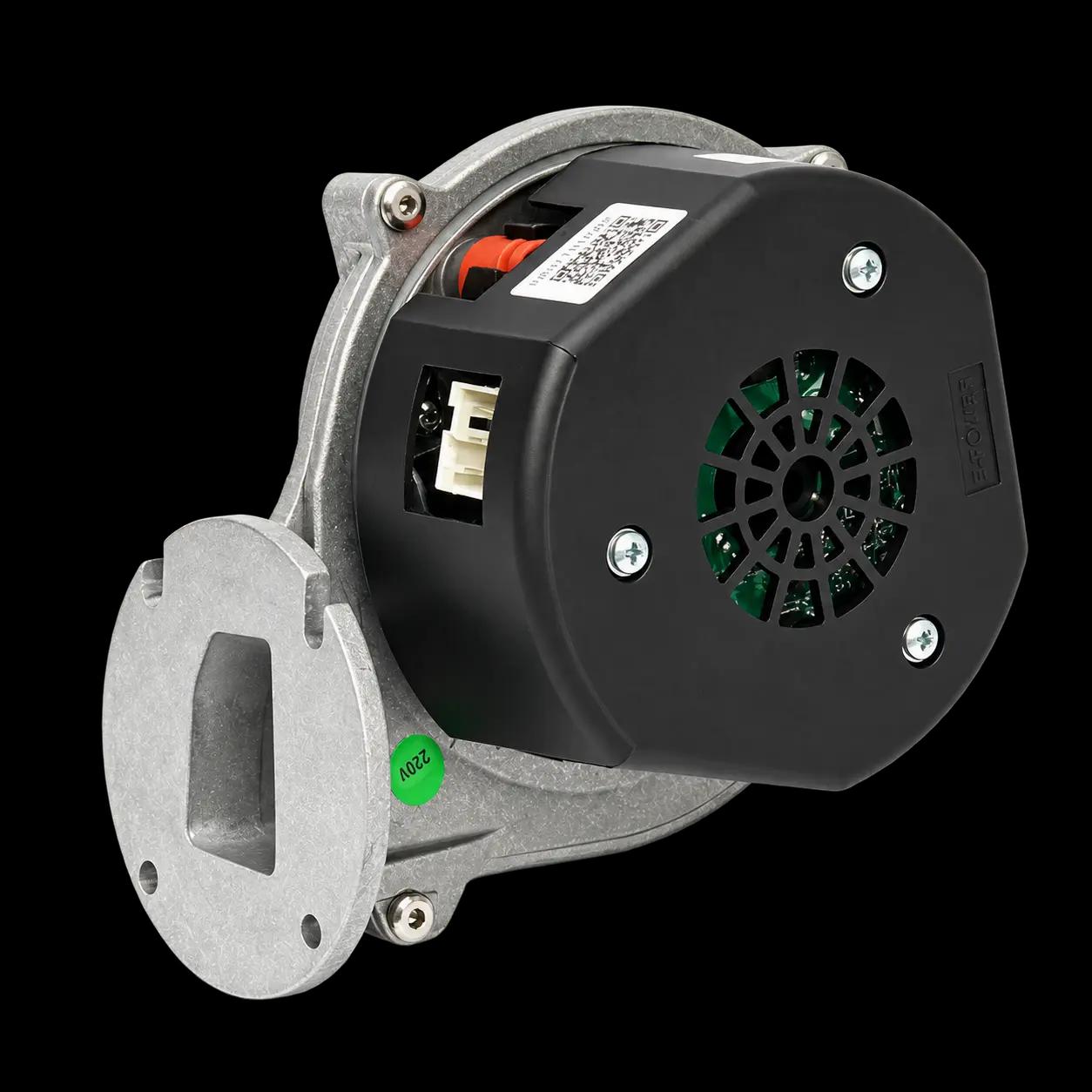
01 / 01
Sopladores de gas EC
Soplador de gas EC para sistemas de calefacción y combustión.
Soplador de gas EC de alta eficiencia diseñado para equipos de calefacción y combustión, que cuenta con control electrónico avanzado, rendimiento de flujo de aire estable, bajo consumo de energía y soluciones personalizables para aplicaciones OEM.
View product details
Bring us the equipment requirement
Send the target operating point and integration constraints. We will help evaluate a suitable blower direction and validation plan.
FAQ
Questions from equipment manufacturers
Should the blower be selected with a clean or loaded filter?+
Both conditions matter. The system should provide suitable capture with a new filter and retain sufficient pressure margin as resistance increases within the intended service interval.
Where should the blower sit relative to the filter?+
Many systems place the blower downstream so contaminated air first passes through filtration, but the final arrangement depends on sealing, filter design, service and safety requirements.
What data is needed to select an extraction blower?+
Provide required capture airflow, pressure losses for clean and loaded filters, hose and duct layout, number of active stations, voltage, speed control, noise target and operating schedule.
How much pressure reserve is needed for filter loading?+
The reserve should maintain acceptable capture at the defined filter replacement point without forcing excessive airflow or noise when the filter is new.
Can blower speed compensate for a loading filter?+
Variable-speed control can help maintain suction as resistance rises, provided the blower has sufficient pressure capability and the control uses suitable feedback or service thresholds.
How do extraction-arm position and duct length affect performance?+
Longer hoses, tight bends, small diameters and multiple branches increase pressure loss. Capture also falls when the arm is placed too far from the fume source.
How can workstation noise be reduced?+
Use an efficient operating point, smooth inlet and outlet paths, vibration isolation, rigid panels and only the speed needed to achieve reliable source capture.
Can one blower serve multiple extraction stations?+
Yes, when the manifold and controls are designed for the minimum and maximum number of active branches and the blower can cover the resulting range of airflow and pressure.