Residential Heating
Precisely controlled airflow for condensing boilers and home heating systems. E-POWER gas blowers support efficient, low-emission combustion across changing heating demands.
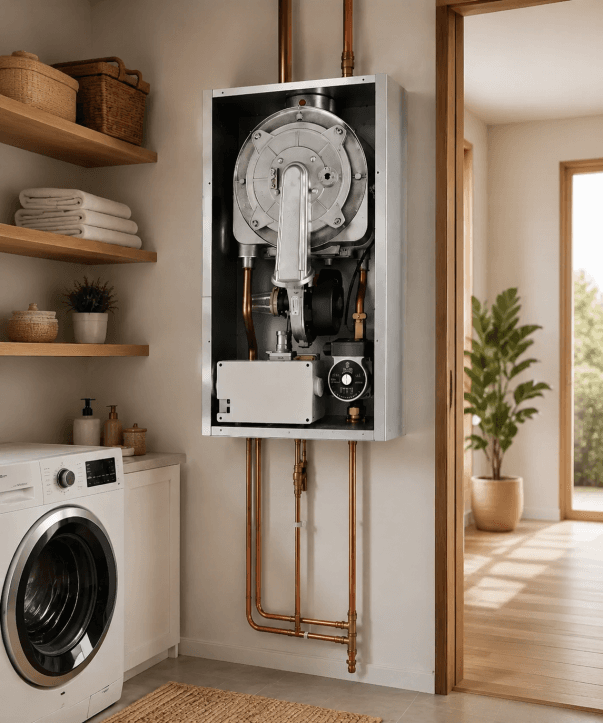
What the blower does
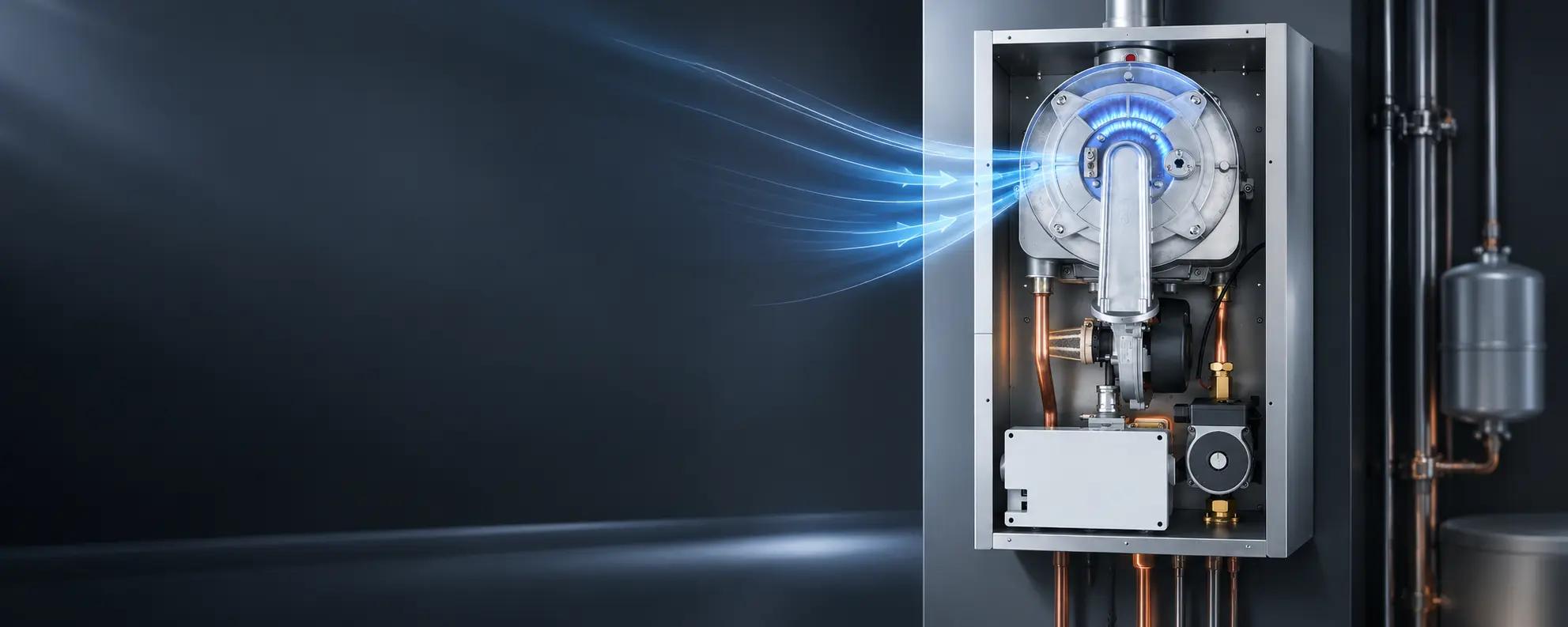
Airflow through the complete system
Supplies the burner with precisely controlled combustion air, enabling high-efficiency, low-emission combustion.
- Fully premixed condensing wall-hung boiler
- Gas-fired heating and hot-water boiler
- 01
Air inlet
Filtered room air enters the appliance.
- 02
Combustion blower
Airflow follows the requested heating load.
- 03
Gas-air premixing
Air and gas are combined at a controlled ratio.
- 04
Burner and heat exchanger
Stable combustion transfers heat to the water circuit.
Recommended product range
Products for Residential heating
Start from required airflow at static pressure, then coordinate voltage, modulation range, Venturi, gas valve and heat-exchanger resistance.
01 / 01
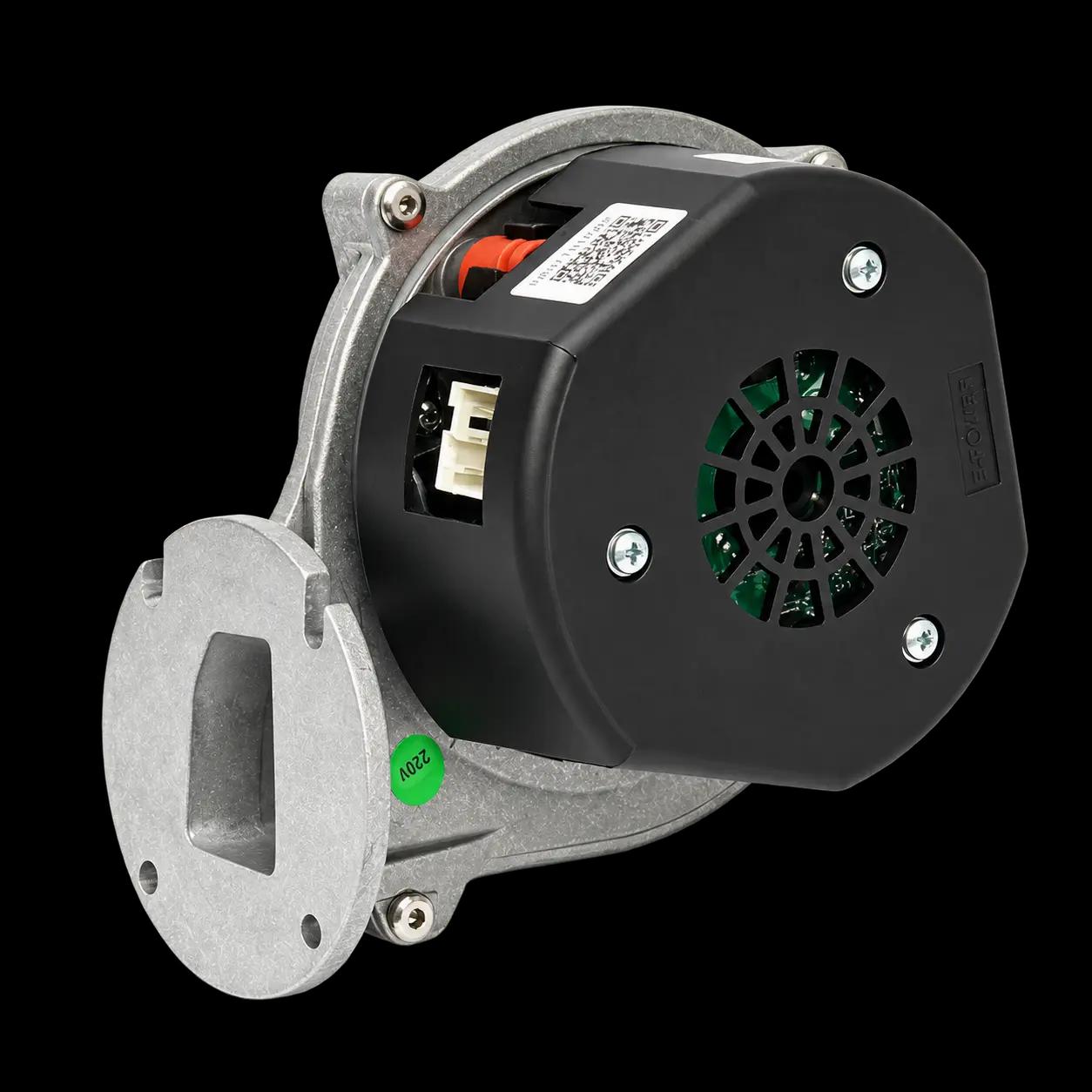
EC Gas Blowers
EC-Gasgebläse für Heizungs- und Verbrennungssysteme
Hocheffizientes EC-Gasgebläse für Heizungs- und Verbrennungsanlagen mit fortschrittlicher elektronischer Steuerung, stabiler Luftstromleistung, niedrigem Energieverbrauch und anpassbaren Lösungen für OEM-Anwendungen.
View product details
Bring us the equipment requirement
Send the target operating point and integration constraints. We will help evaluate a suitable blower direction and validation plan.
FAQ
Questions from equipment manufacturers
Can the blower support a wide modulation range?+
The usable range depends on the complete system curve, motor-control strategy and burner stability. It should be confirmed on the appliance prototype.
How is residential noise evaluated?+
Evaluate the installed appliance, not only the standalone blower. Duct resonance, mounting stiffness, enclosure panels and combustion can all influence perceived noise.
What information is needed to select a residential heating blower?+
Provide the required airflow and static pressure across the modulation range, appliance heat output, voltage, control signal, available envelope, flue arrangement and target noise level.
Can the blower integrate with the boiler controller?+
Yes. The speed command, feedback signal, start-up sequence and fault response can be reviewed so the blower behavior matches the appliance control strategy.
How does the flue arrangement affect blower selection?+
Flue length, bends, terminals and wind conditions add resistance and can shift the operating point. Selection should include the permitted flue configurations and their worst-case pressure loss.
Can inlet, outlet and mounting interfaces be customized?+
Interface changes can be evaluated for OEM projects, including mounting points, outlet orientation, electrical connectors and wiring, subject to aerodynamic, tooling and validation requirements.
How is reliable ignition verified?+
Ignition should be tested on the complete appliance at relevant gas conditions, flue configurations, supply voltages and temperatures while confirming airflow, gas-air ratio and flame stability.
What affects blower service life in a household boiler?+
Operating hours, speed profile, temperature, repeated start-stop cycles, bearing loading, contamination and installation vibration all influence expected service life.