
Select Language

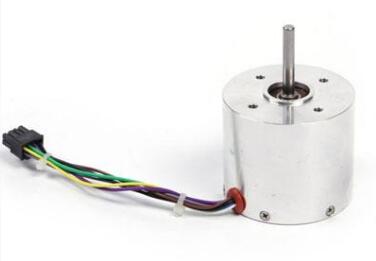
What is the difference between brushless DC motors and traditional motors? Let's introduce the differences between brushless DC motors and traditional motors. Firstly, compared with traditional motors, brushless DC motors have lower noise and longer service life. In addition, brushless DC motors have much better performance in energy saving, speed regulation, waterproof level, and other aspects. Secondly, the casing of Yingdong's brushless DC motor adopts engineering plastic and constant speed control technology. Brushless DC motor is a type of synchronous motor, which means that the speed of the motor rotor is affected by the speed of the rotating magnetic field of the motor stator and the number of rotor poles. Under frequent voltage fluctuations and blade modifications, the motor speed remains basically unchanged, ensuring the normal and efficient operation of the refrigeration system. The motor can reverse the dust according to the set time and time, and then rotate normally to keep the condenser disk clean and efficient.
The application scope of brushless DC motors and traditional motors is also different. Brushless DC motors are widely used in industries such as medical equipment, cooperative robots, household appliances, and power tools. Brushless DC motors are available in various sizes and specifications, and can be customized according to customer requirements. Welcome to inquire by phone.
The above is our introduction to the differences between brushless DC motors and traditional motors, hoping to be helpful for your selection.
In fact, the maintenance of brushless DC motors is also very important. Firstly, before disassembly, compressed air should be used to clean the dust on the surface of the motor, and the surface dirt should be wiped clean. Then choose a workplace for dismantling the motor and clean up the on-site environment. It is also necessary to be familiar with the structural characteristics and maintenance technical requirements of the motor. In order to further understand the defects in the operation of the motor, if conditions permit, inspection and testing can be conducted before disassembly.