
Select Language

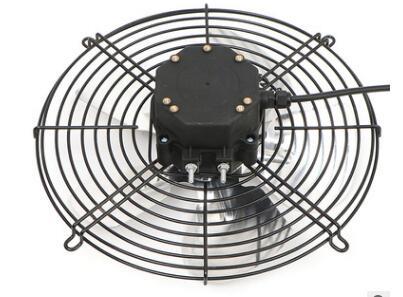
In daily use, we need to pay attention to the maintenance and upkeep of energy-saving fan motors. If we pay attention during daily use, our service life can be greatly extended. Otherwise, it is very likely that the energy-saving fan motor will not work. What should we do if this phenomenon occurs? Below, we will analyze the reasons why the energy-saving fan motor does not work from several aspects to analyze the situation.
The reason why the energy-saving fan motor does not work may be because the heat from the high-pressure pipe cannot be cooled in the condenser. The high-temperature part is close to the evaporator before heat dissipation, and the evaporative cooling part delays evaporation. Therefore, there is water in the return pipe or compressor, which causes the energy-saving fan motor to not work. We generally recommend focusing on checking the condenser fan or fan circuit. The condenser of energy-saving fan motors is generally air-cooled. We can use forced exhaust fans for cooling. If the energy-saving fan motor fan does not rotate, the heat generated by the condenser cannot be discharged, and the refrigerant cannot liquefy, resulting in excessive exhaust pressure, high compressor load, high current, and no refrigeration phenomenon. The above are several situations where the energy-saving fan motor does not work. Next, let's introduce the disassembly method of energy-saving fan motor. However, if there is a malfunction, we can also disassemble it to identify the cause.
The disassembly method of the energy-saving fan motor is as follows: the upper fan of the energy-saving fan motor needs to be disconnected, the rear cover plate needs to be removed, and the fan screws of the energy-saving fan motor fixed to the compressor can be disassembled with screws. The energy-saving fan motor fan on the other side of the evaporator is difficult to disassemble. First, remove all the casings of the energy-saving fan motor, so that when the fan is in the upper air outlet position, it can be removed with screws.